Maro Maata’s satirical take on Farooq Abdullah’s remark
Standing in Baramulla… cheering for Pakistan!
Baramulla. The name alone brings back the massacre of 22 October 1947, when tribal raiders sent by Pakistan swept through the town. Homes were torched. Women were carried off. Even the nuns at St Joseph’s Hospital were not spared. Not even two days had passed since the anniversary of that attack.
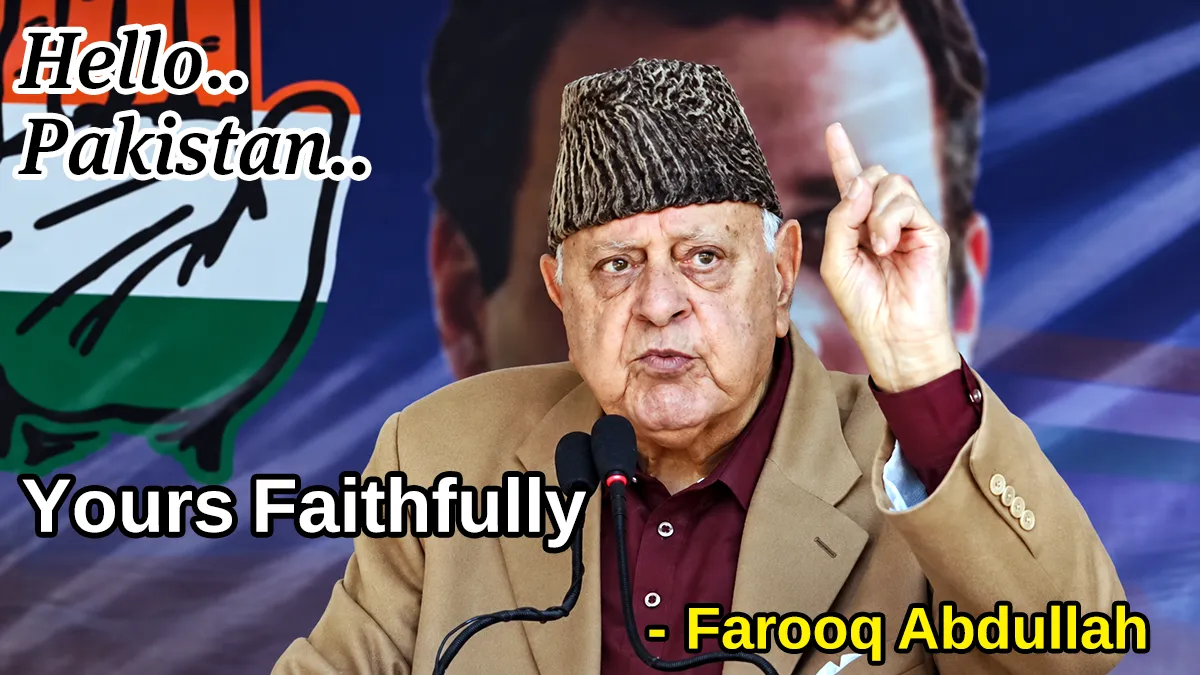
In that same Baramulla, on 24 October, Farooq Abdullah, five times Chief Minister, stood before his party workers. Do you know what he said? “The neighbouring country keeps talking about Kashmiris all over the world. That is why we are alive. Otherwise, India’s intentions towards Kashmiris are not good.”
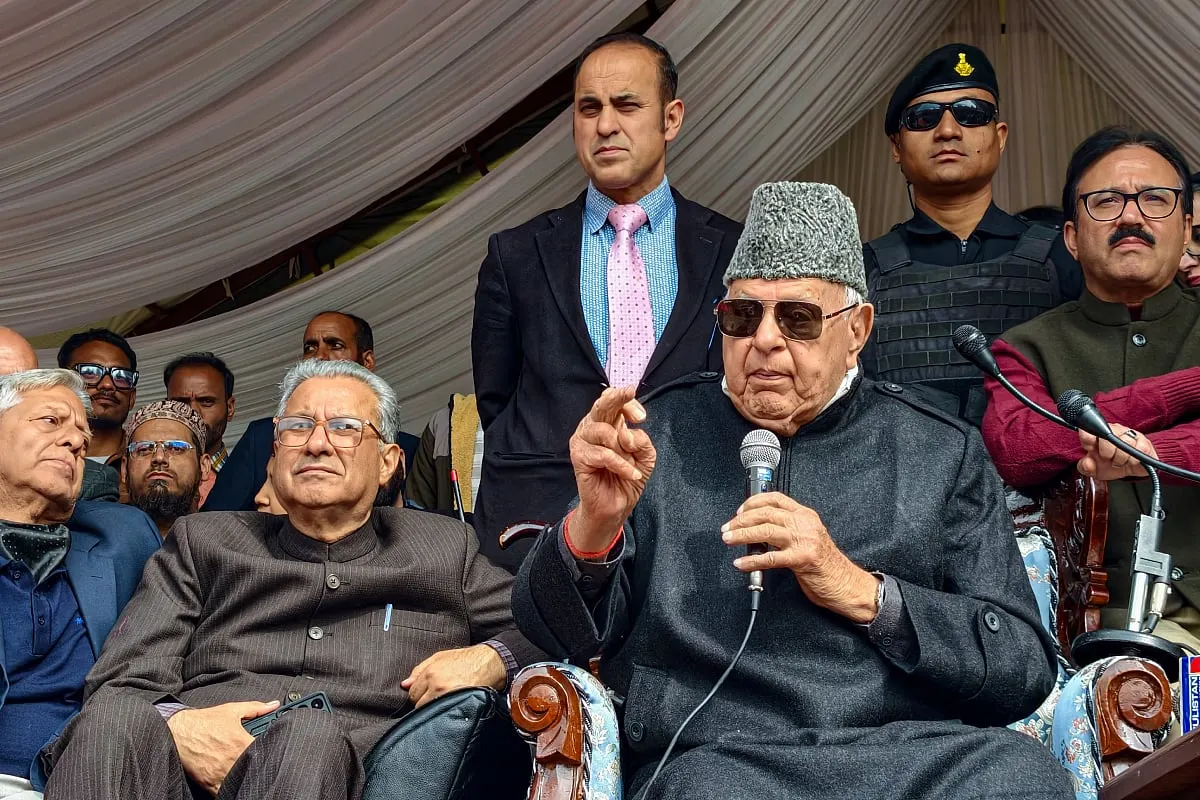
What does that mean? Standing on soil our soldiers guard with their lives, he thanked the country that unleashed terrorists on those very soldiers. And this from a man who swore an oath on India’s Constitution and enjoyed office as an MP, a Union Minister and a Chief Minister. How much nerve does it take to say such a thing, Farooq?
Become Chief Minister under India’s Constitution. Go to Parliament. Enjoy power as a Union Minister. And in the end, declare that it is Pakistan that protects Kashmiris! Power from India, praise for Pakistan? Is raising Kashmir at international forums the same as protecting its people? Ask the mothers of soldiers killed by terror. Ask the Pandit families who fled the Valley. They will tell you how Pakistan “protected” them. If you have differences with Delhi, is the answer to hold up Islamabad as a ray of hope?
This was no slip of the tongue. It is the twisted thinking this family and this party have carried for eighty years: the habit of living in India while singing Pakistan’s tune. Let us see where it was born and how it grew.
From Muslim Conference to National Conference
The National Conference was born in October 1932 as the “All Jammu and Kashmir Muslim Conference”. Sheikh Abdullah and Chaudhry Ghulam Abbas founded it to oppose the rule of the Dogra Maharaja. On 11 June 1939 it was renamed the “National Conference” and opened its doors to all faiths. In 1946 it led the “Quit Kashmir” movement against Maharaja Hari Singh. That was a fight against monarchy, not against India. There is no need to twist history to hold this party to account. The contradictions in its leaders’ words and decisions are enough.
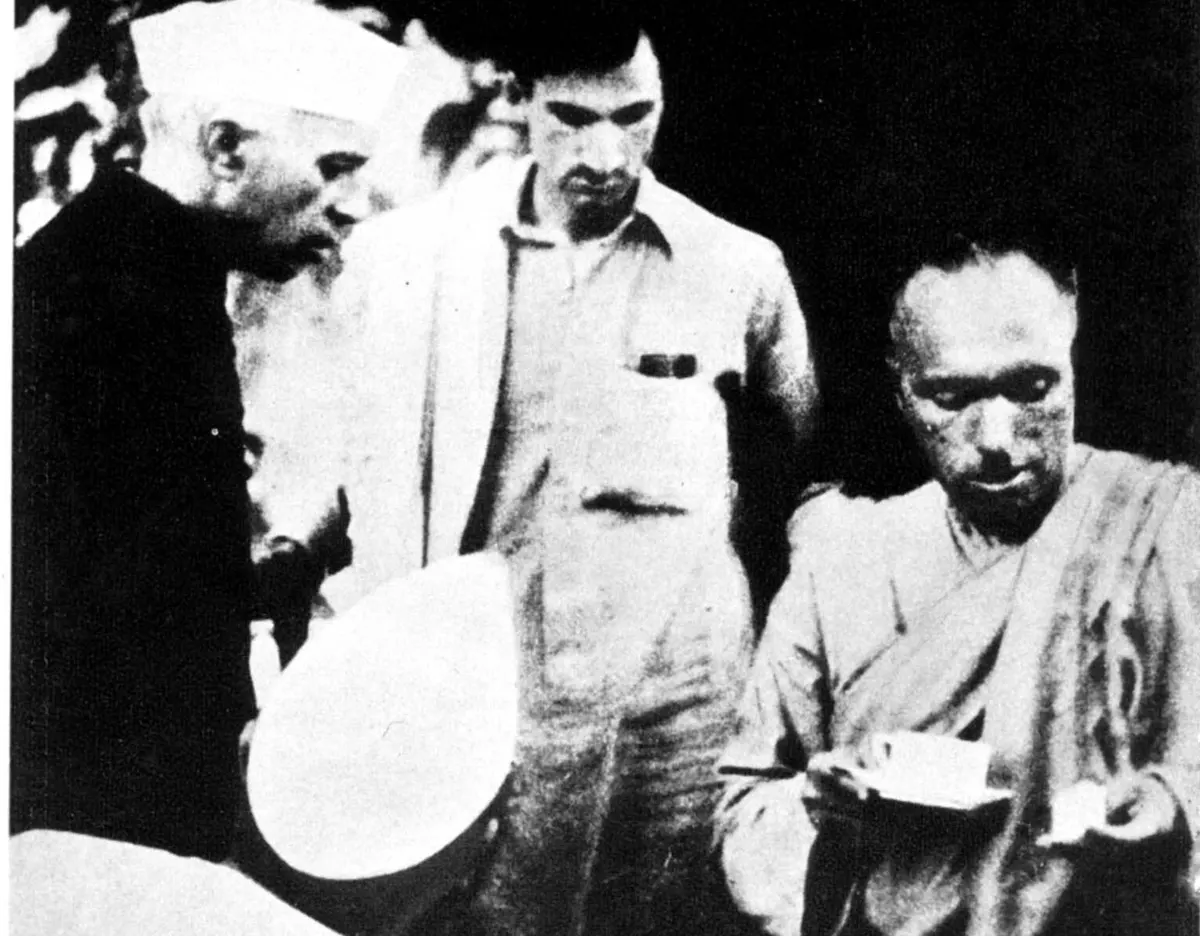
One thing must be honestly admitted. In those days Sheikh Abdullah stood with Nehru. The Ghulam Abbas faction that broke with him revived the old Muslim Conference, joined hands with Jinnah’s Muslim League and demanded in 1947 that Kashmir merge with Pakistan. When Pakistani raiders attacked in 1947, Sheikh Abdullah stood on India’s side. In February 1948 he spoke strongly against Pakistan at the United Nations.

Farooq’s first answer comes from his own father. On 5 February 1948, at the UN Security Council, Sheikh Abdullah laid before the world the atrocities of the raiders who came with Pakistan’s help. He said Muslims, along with Hindus and Sikhs, were among their victims. He defended Kashmir’s accession to India. How does the son now explain away the history of attacks his father placed before the world? If Pakistan is Kashmir’s protector, who backed the attacks Sheikh Abdullah condemned, Farooq Sahab?
So where did the problem begin? They were happy to be with India, but on conditions. Full integration with India they did not want. The idea of “our own Prime Minister, our own flag, our own Constitution” was born right there. Raise Pakistan’s name when Delhi won’t listen; sing India’s song once the need is met. This habit of keeping a foot in both boats began then.
The father’s era: dreams of an independent Kashmir
The honour India gave Sheikh Abdullah was no small thing. In 1948, the post of Prime Minister of Jammu and Kashmir. Special status, a separate Constitution. And what did he give in return?
1953 – His own deputy turned against him. His deputy, Bakshi Ghulam Mohammad, opposed Sheikh Abdullah’s leaning towards an independent Kashmir. On 8 August 1953, Sheikh was dismissed and arrested. Note this: it was not Delhi’s leaders who rose against him. It was his own party.
1955 – The Plebiscite Front. Sheikh’s lieutenant Mirza Afzal Beg set it up to demand a vote on whether Kashmir should stay with India or join Pakistan. That was putting a state that had already acceded to India back on the bargaining table. This same Plebiscite Front later merged into today’s National Conference.
1958 – The Kashmir Conspiracy Case. Sheikh, Afzal Beg and 22 others were charged with conspiring with Pakistan for an independent Kashmir. The Government of India told the UN that Sheikh had sheltered Plebiscite Front workers wanted for looting, arson and murder at Hazratbal, and that one of them was caught in his house. (To be fair, Nehru withdrew the case in 1964. Nothing was proven in court.)
1964 – The Hazratbal speech. As soon as he walked out of jail, he declared at Hazratbal that Kashmir’s accession to India was not irrevocable.
1965 – Parleys with China. On a foreign tour, he met Chinese Premier Zhou Enlai in Algiers, the leader of the country that had fought us in 1962. He was re-arrested on his return. Fifty-five years later, his son Farooq would also invoke China. More on that later.
1975 – Compromise for power. He made an accord with Indira Gandhi, set aside the plebiscite demand and became Chief Minister again. Twenty-two years of “plebiscite” struggle surrendered before the chair. That accord clearly recognised Jammu and Kashmir as a constituent unit of the Indian Union. Why speak ambiguously about a bond signed for power, every time power slips away? What is the Abdullah family’s stand on that accord today?

1977 – Freedom for conspirators. Al-Fateh activists arrested in 1971 for conspiring with Pakistan and for armed rebellion against India were all released by Chief Minister Sheikh Abdullah, cleared of every charge.
The son’s era: same song, new tune
After Sheikh Abdullah died in 1982, Farooq became Chief Minister. Along with the party, he inherited that twisted thinking.
1987 – The election that set Kashmir ablaze. The election that returned Farooq to power in alliance with the Congress is widely believed to have been rigged. With it, Kashmir’s youth lost faith in democracy. The Pakistan-backed JKLF’s armed revolt grew from there. Pakistan was handed the opening it wanted on a golden platter. (Rajiv Gandhi’s Congress of the time shares equally in this sin.)
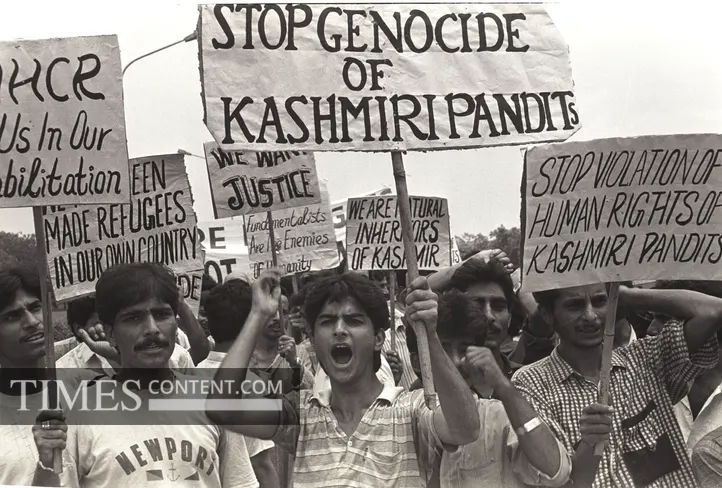
1990 – When the Pandits fled. Hit lists were doing the rounds and Pandit leaders were being killed one by one. When Jagmohan was appointed Governor in January 1990, Farooq resigned. Between 1990 and 1992, more than 70,000 of 75,343 Pandit families left the Valley. It is true his government was out of office when the exodus peaked. But in 1989, while Farooq was still Chief Minister, BJP leader Tika Lal Taploo, retired judge Neelkanth Ganjoo and lawyer Prem Nath Bhat were murdered one after another. Why could his government not stop the rising targeted killings and threats? Does a leader who failed to protect people under his own rule now lecture us on Pakistan’s “protection”?
2015, 2017 – “PoK belongs to Pakistan.” “We are a nuclear power, and so are they. We cannot take their part.” In 2017 he went further: “The Kashmir under Pakistan belongs to Pakistan, and this side to India. However many wars are fought, this will not change.” In 1994, Parliament unanimously resolved to reclaim PoK, a resolution his party’s MP also supported. When a court in Bettiah, Bihar, ordered a sedition case against him, he mocked it: “I welcome the FIR.” In 2024, when Defence Minister Rajnath Singh spoke about PoK, he warned that Pakistan has atom bombs and they would fall on us. Saying no to war is one policy. Putting a permanent seal of approval on occupation is quite another. Must India give up its rights for the sake of peace?
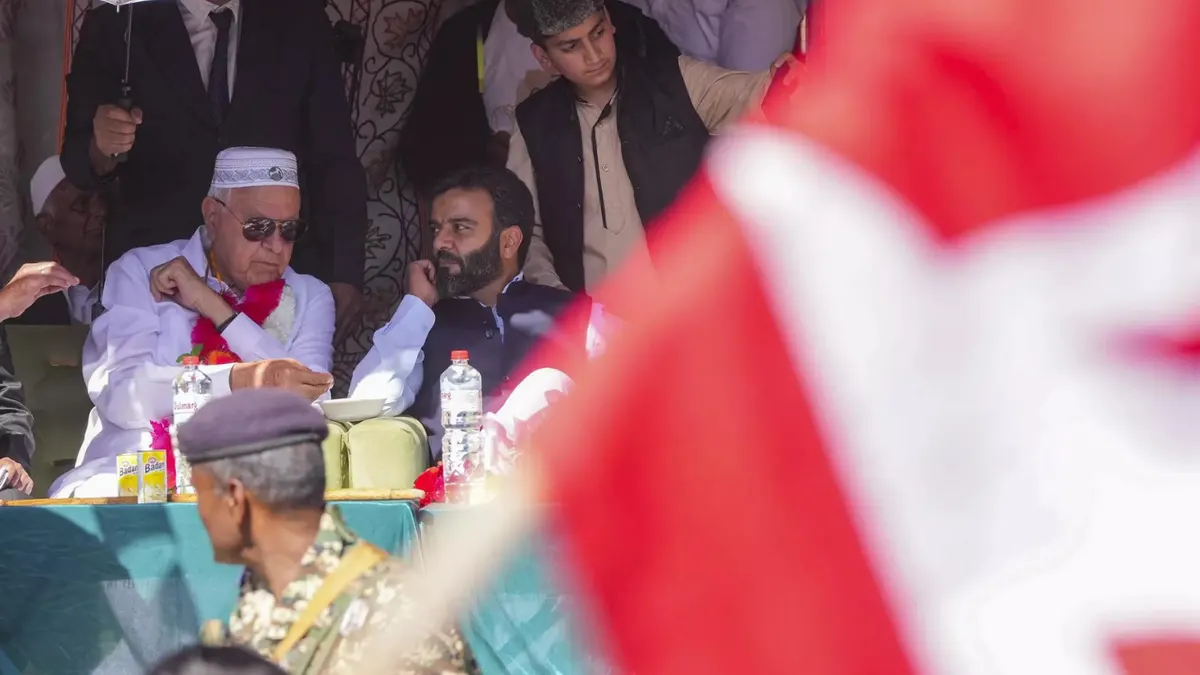
2020 – Like father, like son. Our soldiers were facing China’s army in Ladakh. Not even four months had passed since 20 jawans gave their lives in Galwan. That is when Farooq said: “Whatever China is doing at the LAC is because of the abrogation of Article 370. I hope that with their support, Article 370 will be restored.” Not only the BJP but his old friend, Congress veteran Karan Singh, condemned it as “totally unacceptable“.
Gupkar – the ‘turn back the clock’ campaign. On 4 August 2019, the day before 370 was revoked, the Gupkar Declaration was signed at Farooq’s house. As Ram Madhav put it, in the father’s time it was “pre-1947 status”. After the 1975 accord it became “pre-1953”. Now it is “pre-2019”. The goalposts keep shifting. The game stays the same.
Three generations of ties with Pakistan’s leaders
1964 – In Ayub Khan’s court. Sheikh Abdullah went to Pakistan with Nehru’s consent. Red-carpet welcome in Rawalpindi. Talks on Kashmir with President Ayub Khan and Foreign Minister Zulfikar Ali Bhutto. The young Farooq Abdullah was part of the delegation. And where did Sheikh get the news of Nehru’s death? Right after addressing a public rally in Muzaffarabad, the capital of PoK.
1968 – Thanks to Ayub Khan. This matters a great deal. After his release from detention in 1968, Sheikh Abdullah sent Ayub Khan a personal message, thanking Pakistan for supporting Kashmiris’ “struggle for self-determination”. Ayub replied that support for Kashmiris’ birthright would continue. Thanks to the dictator who waged war on us in 1965, just three years after that war! Do you see it now? Farooq’s “Pakistan is saving us” is nothing new. It is a fresh copy of his father’s letter from fifty-eight years ago.
1974 – Farooq’s PoK visit. Even before Sheikh Abdullah reached his accord with Indira, Farooq travelled to Pakistan and PoK. Kashmiri historian M.Y. Taing has confirmed that he met JKLF leaders there, including its founder Maqbool Bhat. (Taing does, however, deny the claim that he went at the JKLF’s invitation, and the allegation that he signed some agreement.)
2006 – The third generation, face to face with Musharraf. Farooq’s son, today’s Chief Minister Omar Abdullah, met then Pakistani President Pervez Musharraf one-on-one in Islamabad and handed his party’s autonomy proposal to him personally. Why does a Pakistani military dictator’s opinion matter on how many powers a state of India should have? This was the mastermind of the Kargil conspiracy. Back home, Omar praised Musharraf’s proposals as “logical“.
After every terror attack: ‘Talk to Pakistan.’ In 2021 he said India should “restore the rights it had usurped” from the neighbouring country. He also said that had Pakistan not acted foolishly in 1947, the Maharaja would have kept Kashmir independent. In 2023, right after the terror attack on our jawans in Poonch, he warned that without talks with Pakistan “we may meet the same fate as Gaza“. Before the soldiers’ coffins had even reached home, the advice was to shake hands with those who had them killed!
No one says talks are wrong. Vajpayee took the bus to Lahore; in return came Kargil. Modi went to Nawaz Sharif’s home; in return came Pathankot and Uri. “Terror and talks cannot go together” is the lesson India learned in blood. Farooq Sahab never seems to understand it. No, he pretends not to.
Farooq Sahab, what has Pakistan given Kashmir?
Is Pakistan protecting Kashmiris? Then look at this record.
It was Pakistan that sent tribal raiders in 1947 and burned Baramulla. It was Pakistan that sent infiltrators in 1965 under “Operation Gibraltar”. It was Pakistan that crept into the heights of Kargil in 1999. For three and a half decades, it was Pakistan that sent AK-47s, training camps and money to put guns in the hands of Kashmir’s youth. Pulwama, Uri, Pahalgam. Behind every bloodstain, the names Lashkar and Jaish. It was Pakistan that sheltered those groups.
The UN Security Council itself has formally listed the Lashkar-e-Tayyiba as a terrorist organisation operating from Pakistan. To set aside the violence of such groups and praise Pakistan’s international speeches is to insult the victims’ blood.
And see this irony. In 2025, after 26 tourists were shot dead in Pahalgam, asked their religion first, it was Farooq himself who accused Pakistan of trying to destabilise Kashmir. So what changed in a year and a half? How did the country that was destabilising Kashmir then become its protector now? Has Pakistan’s role changed, or Farooq’s political need?
The biggest irony of all: among the victims of this terror are Farooq’s own party workers. Since 1989, Pakistan-backed militants have shot dead hundreds of National Conference leaders and workers. He now calls “protector” the very country that had his own people killed.
Then there is PoK. When people there take to the streets over electricity bills and the price of wheat flour, the Pakistani army opens fire. If Pakistan truly protects Kashmiris, shouldn’t it first protect the Kashmiris under its own control?
I am not the only one saying this. Listen to Ghulam Nabi Azad, who, like Farooq, served as Chief Minister of Jammu and Kashmir: “I do not agree with Farooq. Pakistan is our destroyer. The people of PoK are giving their lives to break free from Pakistan and join India.” Deobandi cleric Qari Ishaq Gora condemned Farooq’s words and demanded he apologise to Indians. Clerics such as Maulana Khalid Rashid Firangi Mahali and Maulana Saif Abbas also objected. Panun Kashmir has filed a police complaint.
So this is not a Hindu–Muslim quarrel. Nor is it a BJP–NC quarrel. This is India versus those who live in India and sing Pakistan’s song.
The Congress kept the beat
If the Abdullahs’ two-boat politics survived eight decades, it was not for one reason alone. At every stage, it was the Congress that kept those boats afloat.
Nehru – Abdullah is Kashmir. When the Maharaja arrested Sheikh in 1946, Nehru himself set out for Kashmir on his behalf. After 1947 he took Kashmir affairs out of Home Minister Patel’s hands and into his own. For Sheikh: the post of Prime Minister, special status, a separate Constitution. When that same Sheikh leaned towards an independent Kashmir, it was Nehru’s government that had him arrested in 1953. Eleven years later, in 1964, it was Nehru who freed him and sent him to Ayub Khan with the idea of an India–Pakistan–Kashmir confederation. Arrest one day, embrace the next. This swinging is what emboldened the Abdullahs.
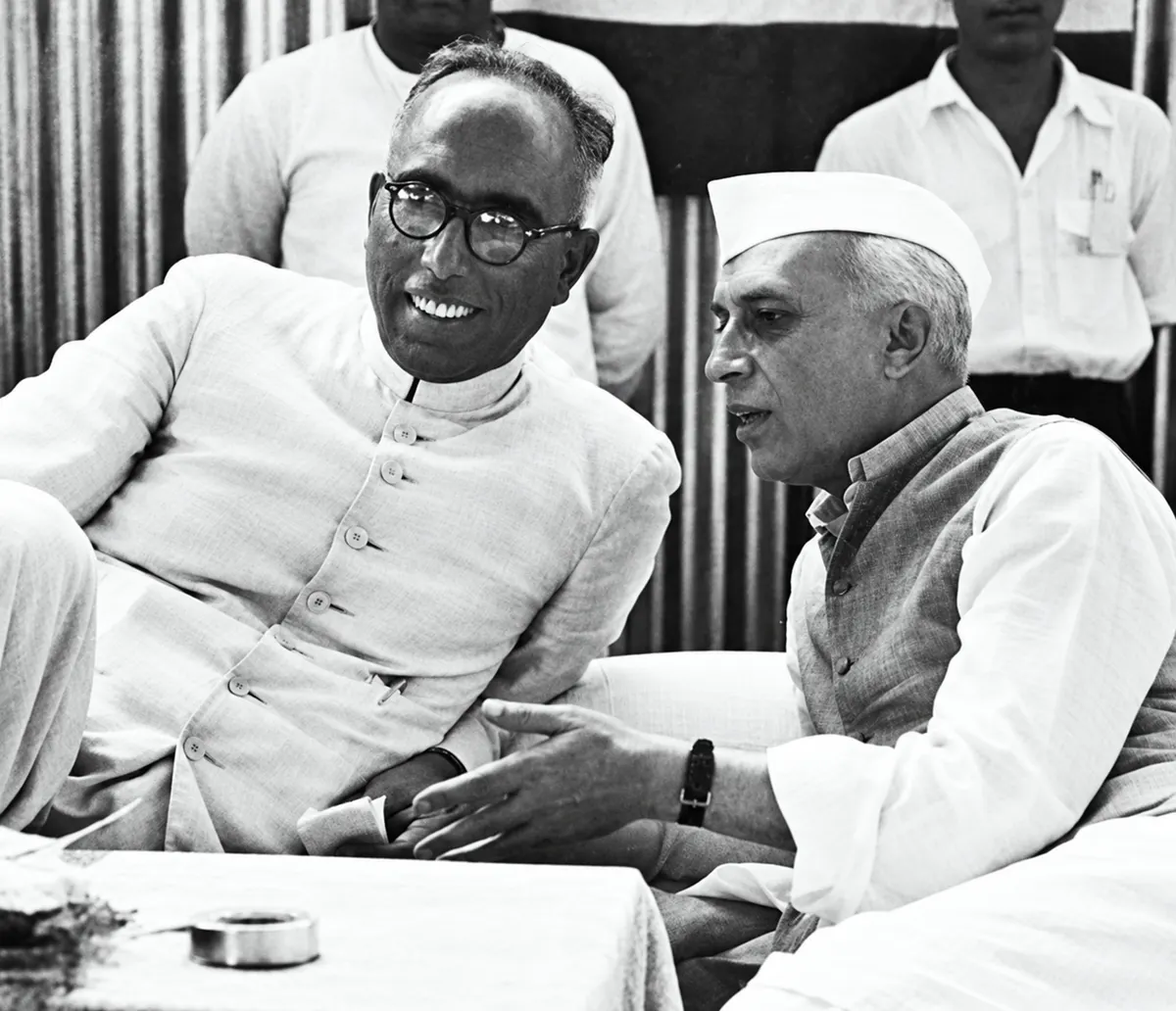
The burden this country still carries was laid down by Nehru’s decisions of that time. What did Nehru achieve with that swinging? What did his daughter Indira achieve?
Indira – giving the chair, then pulling it away. In 1975 Indira Gandhi forgave twenty-two years of plebiscite politics and made Sheikh Chief Minister again. When she fell out with his son, in 1984 she brought down Farooq’s government through a defection engineered with his brother-in-law Ghulam Mohammad Shah. It was a game that turned Kashmir’s democracy into a pawn on Delhi’s chessboard.
Rajiv – an equal partner in the sin of 1987. In 1986 Rajiv Gandhi struck a deal with Farooq and put him back in the chair. In 1987 they contested as a Congress–NC alliance. Those elections, tarnished by charges of rigging, pushed Kashmir’s youth towards the gun. Thousands of lives were lost in the terror that followed. The Pandits left their homes. The Congress shares equally in that bloodstain.
2009–14 – Propping up Omar. Farooq’s son Omar ruled as Chief Minister for six years with Congress support.
2019–21 – A chorus for Pakistan’s song on 370. The Congress opposed the abrogation of Article 370 in Parliament. See how far that opposition went. The BJP alleged that Pakistan PM Imran Khan used Rahul Gandhi’s criticism in an anti-India dossier submitted to the UN. In 2021, Rahul’s close aide and senior leader Digvijaya Singh, speaking with a Pakistani journalist in a Clubhouse chat, said the Congress would “reconsider” the abrogation if it came to power. He called the decision “extremely sad”. Was a chat with a Pakistani journalist the forum he found to state his stand on a decision of India’s Parliament? Instead of condemning it, the party defended it through Tariq Anwar: “It is in line with our stand.” Why be surprised today when Farooq says “Pakistan is saving us”? Because there were those in Delhi singing the chorus to that song.
2024 – The truth told by Pakistan’s own minister. In the 2024 elections the NC and Congress allied again. Remember what Pakistan’s Defence Minister Khawaja Asif said then? He declared openly on Geo News that Pakistan and the NC–Congress alliance were “on the same page” on restoring Articles 370 and 35A. When an enemy country’s defence minister praises your alliance, is it an honour or a warning? Farooq replied then, “I am not a Pakistani, I am an Indian.” Within two years, the same mouth said “Pakistan is saving us”.
Now – distance is not enough; cut the ties. To be fair, the Congress has not stayed silent this time. The J&K Congress distanced itself from Farooq’s remarks, declaring that Jammu and Kashmir is an integral part of India and that Pakistan has no right to interfere in our internal affairs. Leaders such as Udit Raj and Imran Masood also called the remark wrong. Good. But a post on X and a step back are not enough. The NC is still the Congress’s ally, still a partner in the INDIA bloc.
The Congress’s real mirror – the 1994 resolution. What is the weapon this article uses to hold Farooq to account? The unanimous resolution of Parliament on 22 February 1994 to reclaim Pakistan-occupied Kashmir. Do you know who brought it? The government of Congress Prime Minister P.V. Narasimha Rao. The man who publicly rejected the pledge that PV, a proud son of Telugu soil, gave the nation, saying “however many wars, PoK will remain Pakistan’s”, is Farooq. How can the Congress ally with a leader who kicked aside PV’s resolution? Are a few seats in Srinagar worth more to the Congress than its own Prime Minister’s pledge?
Rahul Gandhi ji, three straight questions for you.
- Your ally called Pakistan a “protector”. Instead of hiding behind a state spokesperson’s post on X, why don’t you condemn it yourself?
- Is your party still committed to the 1994 PoK resolution brought by P.V. Narasimha Rao’s government? If so, how do you share a stage with the man who rejects it?
- If Farooq does not apologise, will you break the alliance with the NC? Or is the alliance more important than patriotism?
Nehru’s swinging, Indira’s chess, Rajiv’s rigged alliance, Digvijaya’s Clubhouse chats, Rahul’s silence. In this eight-decade story, whenever the Abdullahs sang, it was the Congress that kept the beat. The country is watching to see whether it stops this time.
(The Congress’s side must be heard too. They will say it was the statecraft of Nehru and Indira that kept Kashmir in India, and that the 1975 accord itself sealed Kashmir as an integral part of the Union. Congress leaders too lost their lives fighting terror. But no argument can cover up the concessions that statecraft gave the Abdullahs’ double game for decades.)
Their arguments, our answers
To be fair, the National Conference’s side must be heard too. This is what they say.
“The Centre promised statehood. It still hasn’t delivered.” True. The promise of 2019 remains unfulfilled, and the demand is just. But the fight for statehood belongs in Parliament, in the courts, among the people. Not in cheering for Pakistan. If you are angry with Delhi, fight Delhi. Don’t praise the enemy.
“Autonomy is a constitutional right under the Instrument of Accession. It is not separatism.” The Supreme Court upheld the abrogation of 370 in 2023. After that verdict, this same NC contested the 2024 elections, won, and Omar became Chief Minister under the same Indian Constitution. Enjoying power under that system while speaking words that weaken it: that is speaking with a forked tongue.
“Farooq always speaks of dialogue and peace. He himself said Pakistan’s intentions are not good.” Yes, he did. To know its intentions are bad and still say that country “is saving us” is even more dangerous. Saying it unknowingly is naivety. Saying it knowingly is political self-interest.
“It is only a political tactic to pressure Delhi.” That is exactly the problem. For eight decades, this has been the family’s tactic. In power, India’s song. Out of power, or when Delhi won’t listen, Pakistan’s name, China’s name… Three generations of Kashmiris have shed blood because of this three-card trick that uses Kashmir as a pawn.
“Our 2024 manifesto has no merger with Pakistan. It has statehood, restoration of 370 and the dignified return of the Pandits.” True. Then why does the president of a party seeking changes within India’s system portray Pakistan as a protector? It is more than a year and a half since the promise of the Pandits’ return. Don’t hide behind the fact that the police are with the Lieutenant Governor. Put before the people what Omar’s government has done on rehabilitation, jobs and restoring encroached properties. If that promise stays on paper, it is a bigger betrayal than praising Pakistan.
Choose your side
26 October. The day Jammu and Kashmir acceded to India. The day Maharaja Hari Singh, hearing the cries of Baramulla’s victims, signed the Instrument of Accession. Before the ink on it was dry, our soldiers landed in Srinagar and drove the Pakistani raiders out. That day, what saved Kashmir was the blood of Indian soldiers, not Pakistan’s “international campaign”.
Two days before that anniversary, Farooq Abdullah stood in that same Baramulla and called Pakistan a “protector”. How history will remember him, he must think about himself.
Farooq Sahab, you swore an oath on India’s Constitution. You sat in India’s Parliament. You served as a Union Minister in India’s government. Your son is Chief Minister today under India’s Constitution. This country has given your family power, honour and security for three generations. The men guarding your home are Indian jawans, not Pakistan Rangers.
You may be angry with Delhi. Let it be. In a democracy that is your right. But thanking the country that got our soldiers killed, just to vent that anger, is no right. It is a betrayal of the nation.
Why shouldn’t a man who speaks like this be banished from the country? That question is on the minds of crores of Indians today. “If Pakistan is so good, go and settle there,” BJP J&K president Sat Sharma said openly. That anger is justified.
But the answer lies in our own Constitution. Our laws have no punishment that expels an Indian citizen from the country. Article 19 gives every citizen the right to reside anywhere in India, Farooq Abdullah included. That is the real truth he needs to understand. India is the country that gives even the leader who reviles it this much freedom and this much security. Just look at what happens in PoK to those who question the Pakistani army. To know that difference and still say “Pakistan is saving us” is the real insult to this nation.
He does not need banishment from the country. Political banishment is enough, and that lies in the hands of Kashmir’s voters. Whether his words are a crime under law is for the courts to decide. Panun Kashmir’s complaint is already before the police. It must be examined under the law, not quietly shelved.
Farooq Abdullah, Omar Abdullah — answer straight.
- What is the one good thing Pakistan has done for the safety of Kashmiris?
- What is your answer to the citizens who lost their lives without protection under your rule?
- What is your action plan for the return of the Pandits? Give us dates.
- Do you support the 1994 resolution of Parliament to reclaim PoK, or not?
- Will you condemn the politics that glorifies terror and terrorists, without any “buts”?
Question Delhi. Nothing wrong in that. But in the same voice, question Islamabad too. Tell it firmly that its interference in our affairs is unwelcome. Be accountable for every post you have held. See whether you can defend every compliment you pay Pakistan before the victims of Baramulla and the widows of Pahalgam.
Stop telling us who keeps the Kashmir dispute alive. Tell us what you have done so Kashmiris can live without fear, Abdullahs!