Musk eyes India with Starlink
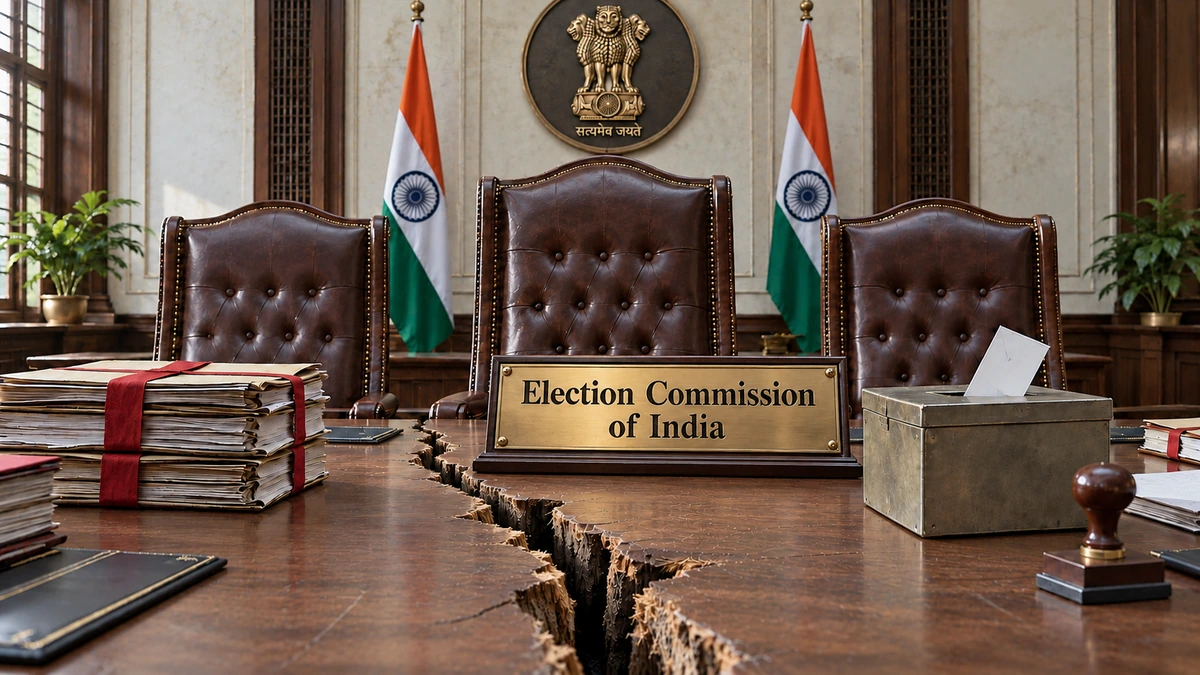
Is he asking for permission to do business in India? Or ordering India to give it? Listen to Elon Musk on Starlink, and the doubt is hard to shake. He says India’s big businessmen are blocking him. He asks whether Ambani is the real boss of India. He talks as if Indians are being wronged because his company is kept out.
India is a huge market for Musk. Remote villages, islands, ships at sea, businesses — satellite internet has plenty of room to grow here. No surprise that he wants it. But we need not mistake his business appetite for love of India.
We can question the dominance of our own telecom giants. We can demand to know why approvals are slow. But must we jump out of the frying pan into the fire?
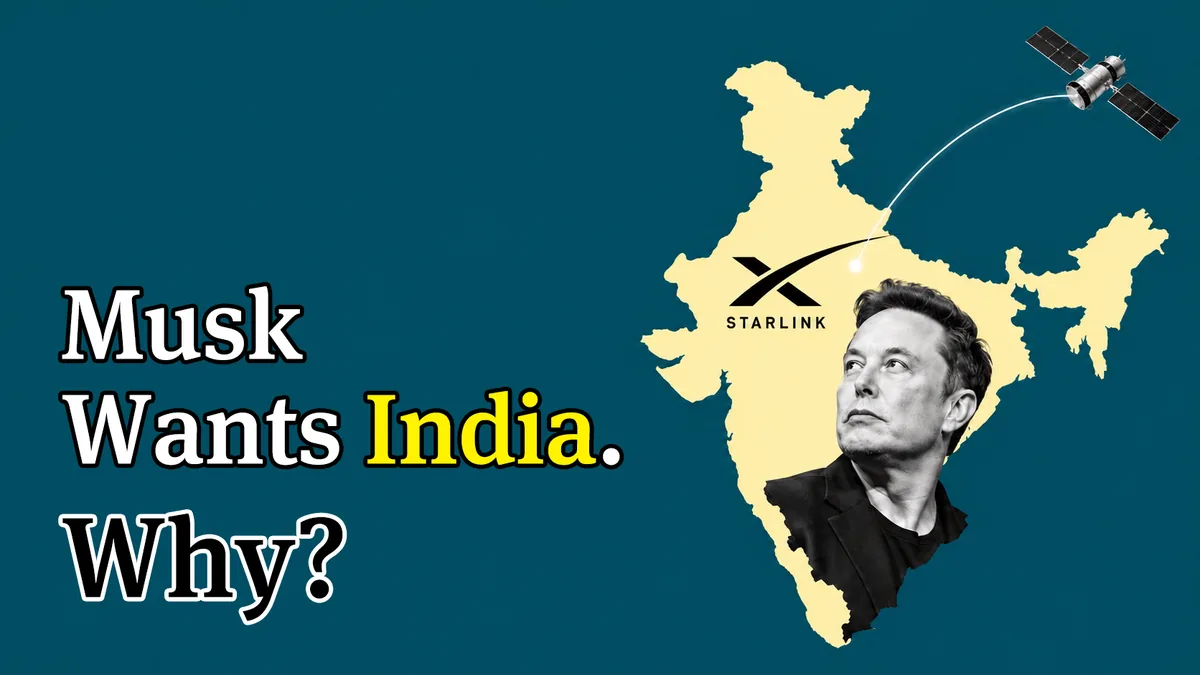
Musk Wants India. Why?
A huge market. India has more than a billion internet subscribers, and Jio alone has over 530 million customers. No market this big is left anywhere else. Khaleej Times
He needs the money. SpaceX’s revenue rose to $7.8 billion in the second quarter of 2026, and Starlink’s subscribers doubled to 12 million. In the same quarter, its spending on AI hit $15.8 billion. Spending like that needs fresh markets, and India is one of the biggest. SpaceX’s quarterly results
Money already spent. Starlink says it has already built 20 gateway sites in India. Without approval, that investment goes to waste. The Daily Pioneer
Beating Jio to it. Musk stepped up his attacks just days before Jio’s parent company launched India’s largest-ever IPO, and promised affordable prices. He wants the market before his rival gets it. Deccan Herald
A grip on the sky. Starlink already operates nearly two-thirds of all active satellites in the world. Add India, and the skies over South Asia and the Indian Ocean fall largely to one company.
The hurry is his business. The caution must be ours.
Whose side is the Opposition on?
Rahul Gandhi’s response made things worse. Replying to Musk, he wrote: “Welcome to India, Elon. Wait till you discover the other guy.” Musk shot back: “Thank you, Rahul. This is indeed troubling.” Their posts
Rahul did not name the “other guy”. Social media widely read it as Gautam Adani. Either way, Rahul turned Musk’s business quarrel into his own political weapon. His post said nothing about security. It did not ask what evidence Musk had. The zeal he showed in attacking his own government went missing when it came to questioning a foreign company.
Criticising the government is the Opposition’s right. Resisting foreign control over the country’s communications is its duty. A Leader of the Opposition should be able to do both. Is this the haste India expects from a man who wants to be Prime Minister? Must he embrace anyone who speaks against Modi and his government?
Will the internet be there? Who decides?
The real question about Starlink is not just how fast it is. Will it be there when we need it? And who decides whether it should be? Ukraine has already answered that.
What Ukraine learned
When Russian strikes wrecked Ukraine’s communications, Starlink came to the rescue. It kept government services, relief work and military communications running. There is no need to belittle that help. Only when we see how much it helped can we see how big the trouble became once Ukraine came to depend on it.
First, know the difference between Starlink and Starshield. Starlink is the satellite internet service for people, businesses and government offices. Armies use it too. Starshield is a separate SpaceX unit built for government defence and security work, including secure communications and Earth observation. SpaceX on Starshield
What wants to enter India is Starlink. Allowing it does not mean allowing spy satellites. There is no evidence that every Starlink satellite is a spy. But even with that difference clear, one question remains: who has the final say over the service? Look at Ukraine.
In 2022, Ukraine asked for Starlink coverage to be extended so it could strike Russian warships near Crimea. Musk refused. It is not true that he switched off a working connection mid-attack. He refused to extend the service where it was asked. But the result was the same: an outsider drew a line across a nation’s war plan. Associated Press
In February 2023, SpaceX President Gwynne Shotwell said the company had taken steps to stop Ukraine from using Starlink to control drones. Such use, she said, was not part of the deal. In other words, the company decided what its service could be used for in a war. Reuters
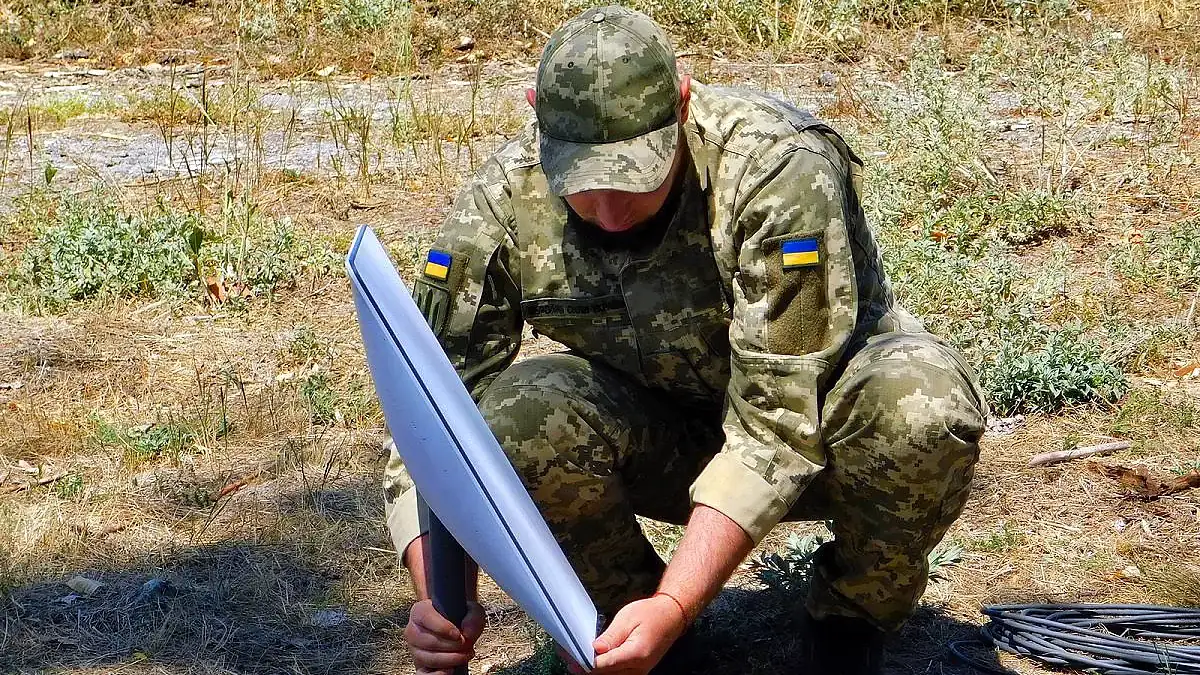
In 2025, Reuters reported that Musk had ordered coverage cut in parts of the front during Ukraine’s 2022 Kherson counteroffensive. SpaceX denied it. Musk also denied another report that cutting off Starlink came up in talks over a Ukrainian minerals deal. These cannot be called settled facts. But the danger that a country’s internet can become a bargaining chip is hard to deny. Kherson investigation, minerals report and denial
This month, the same story played out again. Limits placed on fast-moving terminals in Starshield hit Ukraine’s drones. Musk said the decision was the US government’s. Trump said he had not ordered it. Who gave the order is still unclear. But one thing is clear. Whether Musk decided or Washington did, the power was not in Ukraine’s hands. AP report
The device was theirs. The soldier using it was theirs. The life at risk was his. But the power to set conditions on the connection lay somewhere else.
None of this came free, either. Of the 5,175 terminals delivered through the US aid agency USAID, USAID paid for 1,508 and SpaceX donated 3,677. Other countries paid too. Paying the bill is one thing. Holding the switch is another. That is Ukraine’s lesson. US government review
Is Washington behind it?
SpaceX is no ordinary company. It works for America’s defence and intelligence agencies. Reuters reported that its Starshield unit is building a network of spy satellites for the National Reconnaissance Office, under a contract worth $1.8 billion. Reuters investigation
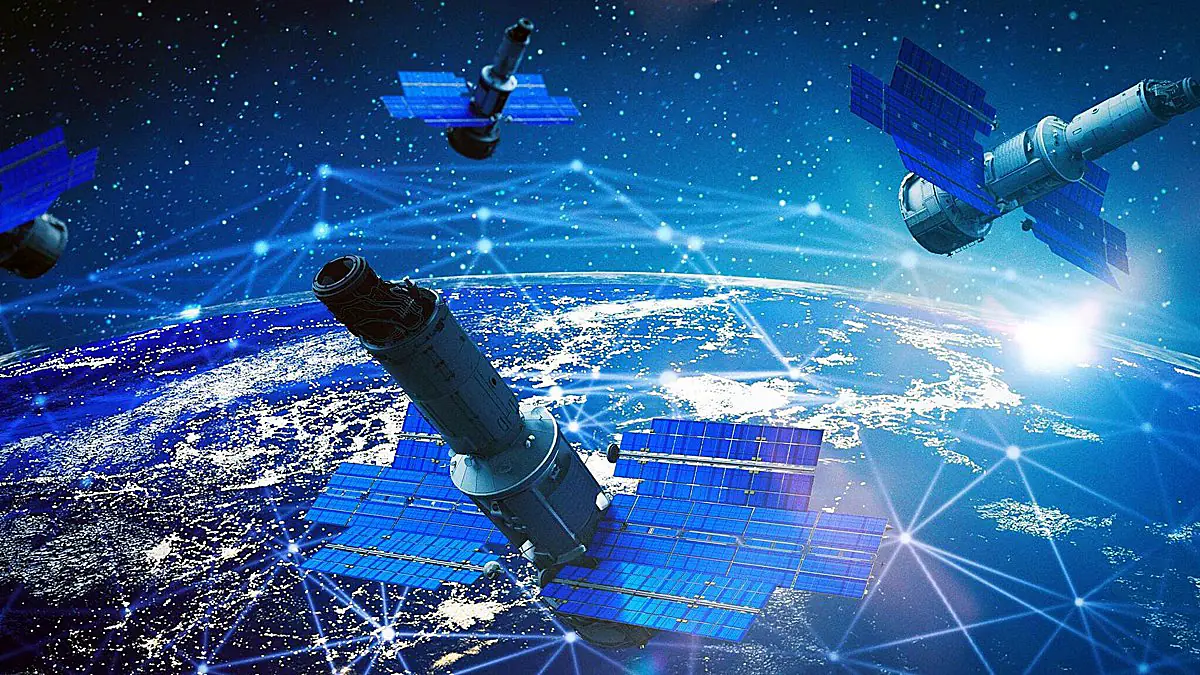
This does not prove that Trump has a secret plan to bring India to heel. But the arithmetic is simple. The more a country depends on American companies, the tighter Washington’s grip on it. Must we wait for secret papers to surface before we see the danger?
Myanmar is closer home. The scam gangs along its border ran on Starlink. Only after the news agency AFP revealed how sharply their Starlink use had grown did SpaceX switch off more than 2,500 devices. Our young people were trapped in those compounds and forced to run scams. Our elders are losing their life savings to “digital arrest” calls. Did the company not see those devices until the press pointed them out? Myanmar Now
What is happening in India?
Starlink’s story in India has raised doubts from the start. In 2021, the Centre had to warn the public because Starlink was taking bookings without a licence. The licence and space clearance came in 2025. What remains are the final security checks and spectrum allocation. The government says these checks are under way for all three applicants, not just Starlink. Reliance says its own satellite service is also waiting for clearance. So it is wrong to say Starlink has no licence, and just as wrong to blame it all on an Ambani plot. Government warning, the current row, Reliance’s response
After the row, Parliament’s Standing Committee on Communications and IT decided to study satellite broadband services. That is the right step. Committee’s decision
The RSS-affiliated Swadeshi Jagran Manch went a step further. It urged the Centre to deny Starlink a commercial launch. It warned that because Starlink satellites talk to each other by laser, Indian internet traffic could bypass domestic gateways and flow abroad, making lawful monitoring hard. SJM’s demand No one has proved this is happening. But the ability itself is the danger, because the decision to use it is not ours.
Starlink devices have reportedly turned up in a security operation in Manipur and in a drug bust in the Andaman Sea. Musk says Starlink does not operate in India. A device being found does not mean it worked here, or that the company helped criminals. But we need answers on where those devices came from, and how. Reuters
The gateway is here; the switch is there
Starlink promises gateways in India and Indian data kept in India. Our rules demand the same. DoT rules But a gateway is only a door on the ground. The satellites overhead, the control rooms that fly them, the software updates, the decision on which dish works where — all of that stays in America.
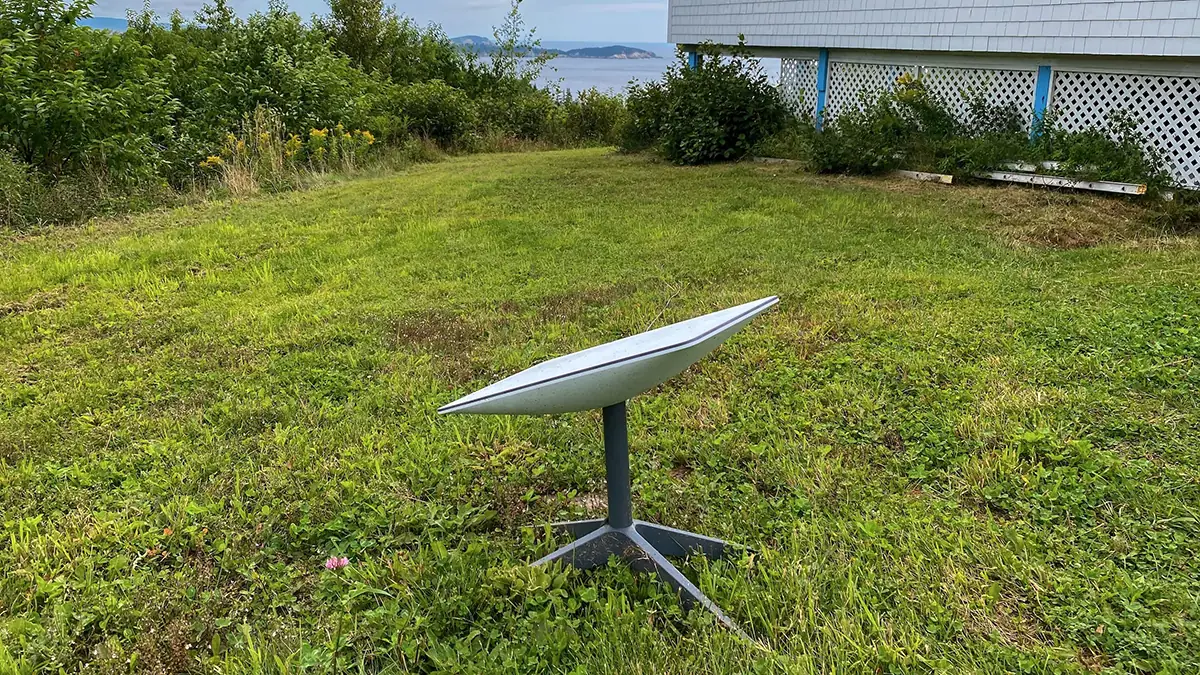
SpaceX is bound by American law. That law — the CLOUD Act of 2018 — lets US authorities demand data from American companies even when it is stored abroad. No deal Starlink signs with India can override it. We saw this in Ukraine. Whether Musk made the final call or Trump did hardly matters. Zelensky did not.
So this is not about whether Musk is a good man or a bad one. The system is built this way. However many promises are made, the switch will not come into our hands. This is not a flaw that conditions can fix. It is the nature of the thing.
The same question applies to other foreign satellite firms. But three things come together only in Starlink: a record of one-man decisions in wartime, deep ties to America’s defence and intelligence machine, and an owner who publicly mocks a government when approval is slow. That is why the first “no” goes to Starlink.
Their arguments, our answers
“Remote villages need Starlink to get online.” America itself did not buy that. In 2022, the US regulator, the FCC, rejected Starlink’s bid for subsidies to serve rural homes and businesses, citing doubts that it could deliver minimum speeds. FCC decision Besides, India has some of the cheapest mobile data in the world. An expensive dish and a monthly subscription are beyond a poor farmer.

Musk is not the only road to satellite internet. Jio is entering the field. It showed off JioSpaceFiber with the foreign firm SES back in 2023. Reliance announcement At India Mobile Congress on 8 October, Akash Ambani said Jio is building a full satellite technology stack at home, but gave no launch date. Details OneWeb is another option. BharatNet fibre is there too. None of these is ready at Starlink’s scale today. But the claim that India has no way forward without Musk is simply wrong. The Swadeshi Jagran Manch argues that home-grown satellite internet, even if it comes a little later, can be far cheaper than Starlink and safe for national security.

“Competition will bring prices down.” We need competition. But among companies that keep the switch in India. Ambani or Musk is not the question. Whether our switch is in our hands or someone else’s — that is the question.
“Starlink works in 165 countries. Why fear it?” Most of those countries have neither borders like ours nor enemies like ours. Ukraine welcomed Starlink too. We saw what followed. And remember this: next door, Pakistan’s National Assembly standing committee told its telecom regulator back in 2025 to fast-track Starlink. Pakistan committee’s order If the same satellites serve both sides of the border, who decides whom to keep connected in a war? Delhi? Islamabad? Washington?
“Security is just an excuse.” Changed terms in Ukraine, scam gangs in Myanmar, devices seized at home — these are not excuses. They are the record.
What India must do
That is why Maro Maata firmly opposes Starlink’s entry. Not out of anger at Musk’s rudeness, but on principle: the switch of a nation’s communications must not sit in foreign hands. No gateway promise can fix that. So India needs not conditional approval, but a clear “no”. The government must say it plainly instead of sitting on the file for years. The licence already granted should be reviewed under the law.
At the same time, the government must take charge of connecting remote India. It must expand home-grown satellite services, fibre and mobile networks fast. The gap Starlink leaves should become an opening for Indian satellite internet.
Do not assume Jio is beyond question because it is Indian. When it uses a foreign partner’s satellites, Jio too must say who has the final say over the service. The same goes for OneWeb, run by France’s Eutelsat with Bharti as a partner. Whatever the company’s name, the yardstick for national security is the same. So is the goal: our own satellite network, with the switch fully in our hands.
Even Asaduddin Owaisi, a fierce critic of Modi, stood with the country on this. He said he has a hundred differences with the Prime Minister, but will not tolerate a foreign businessman mocking the country and its constitutional office. Owaisi’s response Kamal Haasan reminded everyone that no billionaire should dictate a nation’s policy, and that India is a democracy, not anyone’s colony. Kamal Haasan’s response
On this, there is no one country for the ruling party and another for the Opposition. Security must not be traded for Musk’s approval. Anger at the government must not turn into support for a foreign company.
Must we pay the price Ukraine paid to learn the same lesson?
We can buy the internet. We must never need someone else’s permission to keep it running.