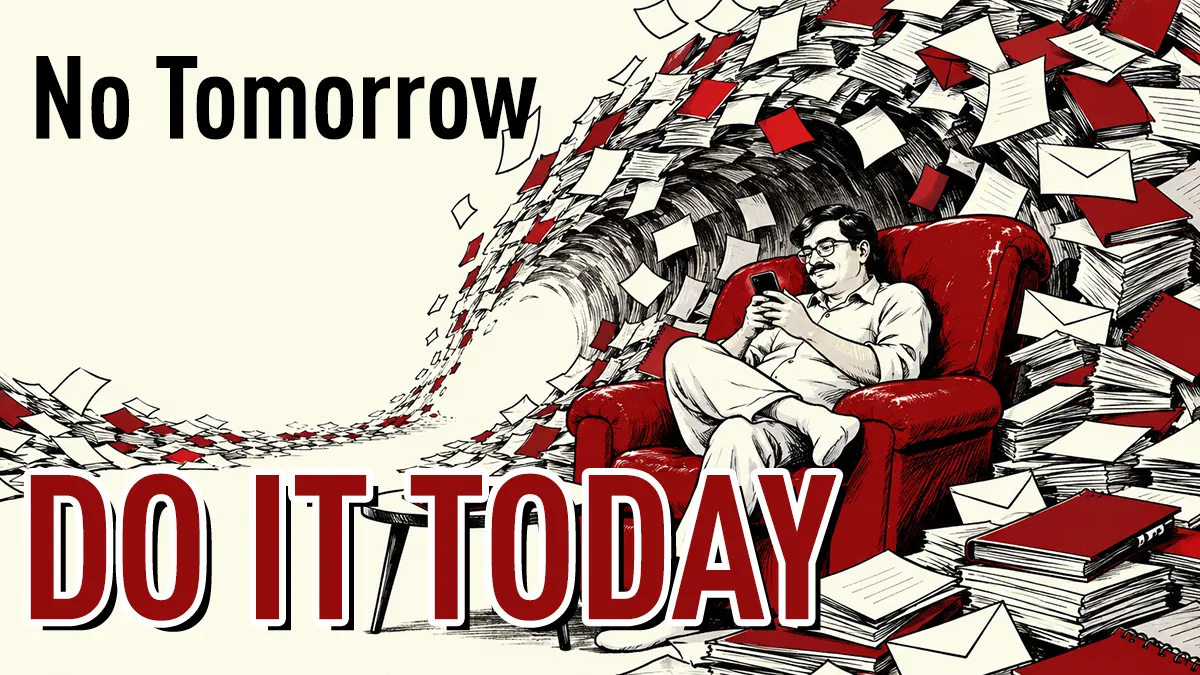
The work piles up… the phone stays in hand.
Kaal kare so aaj kar, aaj kare so ab,
Pal mein parlay hoyegi, bahuri karega kab.
This famous couplet, attributed to Kabir, carries a simple message: “Do tomorrow’s work today, and today’s work now. If everything changes in a moment, when will you get another chance?”
Life is like that, isn’t it? An opportunity we have today may not be there tomorrow. We cannot tell when things will change. Yet how easily we say, “I’ll do it tomorrow!”
Tomorrow, we’ll start walking. Tomorrow, we’ll read more. Tomorrow, we’ll finish all those pending jobs. Tomorrow, we’ll spend some proper time with our family.
The list keeps growing. Somehow, we believe tomorrow will bring more time and fresh energy. Everything we couldn’t manage today, we’ll get done tomorrow.
But who has to do all that work tomorrow?
We do! The very same people who are hesitating to start today.
When Does That Tomorrow Arrive?
Don’t imagine that someone who keeps postponing a task never thinks about it. Often, they think about it quite a lot. They plan how they’ll do it tomorrow. They imagine how good it will feel when it’s finished.
They just don’t begin today.
We end up spending more time thinking about the work than doing it. Our plans live in the future, while nothing moves in the present.
We hand today’s work over to our future selves, expecting them to be more patient, more energetic and better organised. But when tomorrow arrives, it becomes today. Unless our habits change, we say the same thing again: “I’ll do it tomorrow.”
Planning ahead is useful. But we also need to ask what we’re doing today to make that plan happen. If we want to start walking tomorrow, we can get our shoes ready tonight. If we want to read more, we can read one page now.
Yesterday’s money has been spent. Tomorrow’s money hasn’t arrived. What we have in our hands today is what we can use. Time works much the same way. How we use today helps shape our tomorrow.
Why Do We Keep Putting Things Off?
We have plenty of words to describe other people’s laziness. For our own, we have plenty of reasons.
“I’m not in the mood.”
“I need some free time.”
“Let me find out a little more first.”
“This isn’t a good time.”
Sometimes, those reasons are real. But if we keep saying the same thing every day, we need to ask ourselves: Are we unable to do the work, or are we avoiding it?
Laziness isn’t the only reason people postpone things. We may be tired. The task may look too big. We may not know where to begin. We may be afraid of making a mistake or doing a poor job.
Sometimes, wanting to do something really well stops us from doing it at all. We want the first sentence to be brilliant, so we don’t write a sentence. We wait for everything to fall into place before we try.
But we can only improve something after we’ve begun. We can only learn by trying.
So don’t keep calling yourself lazy. Ask why you haven’t started. If you’re tired, rest. If the job looks too big, break it down. If you’re afraid, begin with a small attempt.
Busy on the Phone, Going Nowhere with the Work
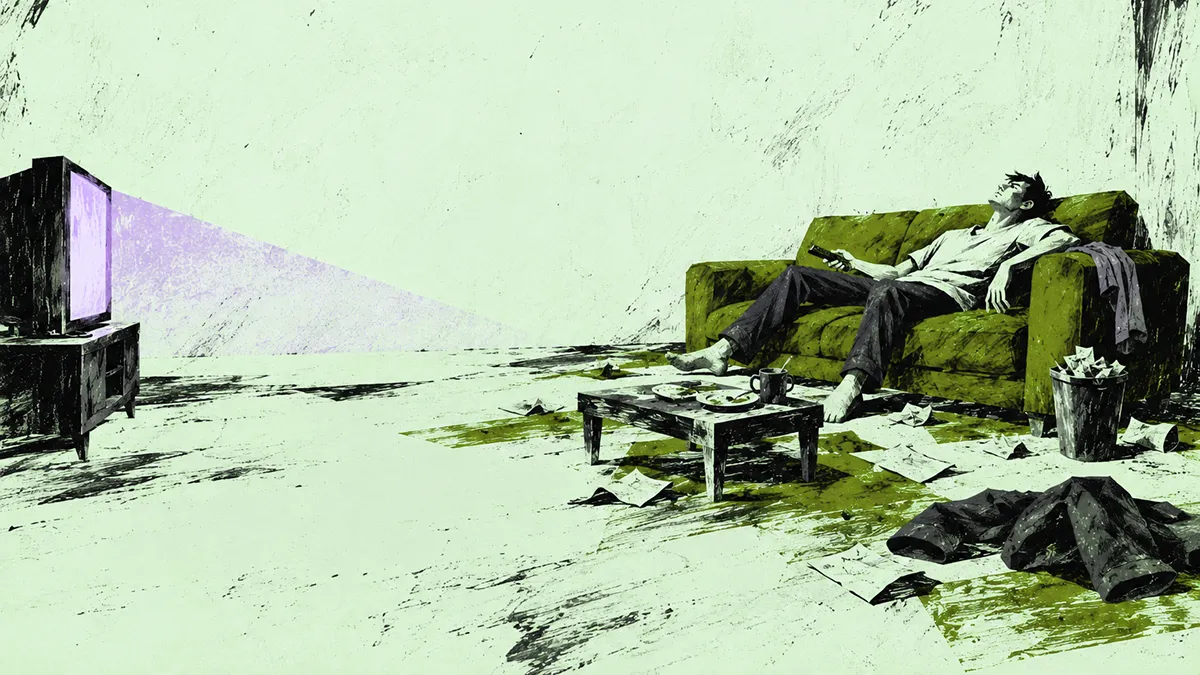
These days, an easy escape sits right in our hands: the phone.
We open it to check one message. A video appears. Then another. There’s a news story, followed by the comments. We move from one thing to the next.
“Just five minutes” becomes an hour.
We’ve been busy on the phone. The work is still waiting.
There’s nothing wrong with using a phone. We work on it, learn from it and stay in touch with people. But notice what happens when a difficult task comes to mind. Does your hand immediately reach for the phone?
Avoiding the work may feel good for a little while. Then we realise we’ve run out of time. The job still needs doing, and now we have to rush.
Try keeping the phone out of reach when you’re doing something important. You may find it much easier to get started.
Even When We Avoid the Work, We Carry Its Weight
An unfinished task can keep nagging at us.
“I need to pay that bill.”
“I need to make that call.”
“I need to talk about that.”
It comes back while we’re watching a film, eating or getting ready for bed. We’ve avoided doing the work, but we haven’t stopped thinking about it.
And what a relief it is when we finally finish!
A job that occupied our thoughts all day takes ten minutes to do. We wonder, “Was that all? Why did I keep putting it off?”
Sometimes, avoiding a task and worrying about it wears us out more than doing it would have.
There’s No “Tomorrow” in a Newsroom
I’ve spent more than three decades working in newspapers. One thing I can tell you from experience: “I’ll do it tomorrow” doesn’t get you very far in a newsroom.
The story has to come in that night. It has to be read, checked and given a headline. The page has to be made up and sent for printing.
One person’s work allows the next person to get on with theirs.
If a reporter keeps saying, “I’ll send it shortly,” the desk has to wait. When the story finally arrives, there may be little time to read it carefully. Even thinking of a good headline becomes a race against the clock.
What a difference it makes when the story comes in a little earlier! There’s time to check it, improve it and finish the job calmly.
As the deadline approaches, we suddenly find the energy to work fast. Something we hadn’t started all day gets done in a hurry.
Was that ability missing earlier? Often, it was there all along. We started when we knew we could no longer postpone it.
Being able to finish under pressure is useful. But why wait for that pressure every time?
The newspaper business taught me something else, too: we are not the only people who pay for our delays. Our colleagues pay for them as well.
Some Delays Cost More Than Others
Not every task is equally urgent. A few can wait without much harm. Others become harder or more costly when we leave them alone.
At work, a small problem can grow while we keep saying, “We’ll look at it tomorrow.” If someone is waiting for our part of the job, repeated delays can also weaken their trust in us.
With our health, too, “I’ll deal with it later” shouldn’t become a habit. A problem that keeps coming back deserves attention. We need to make time to seek advice when it’s needed.
We even postpone conversations with people we care about. We mean to call. We mean to apologise. We mean to sit down and talk properly.
Then days pass. Eventually, starting that conversation feels harder.
How long does a short phone call take? Do we really need to be in the perfect mood to ask someone, “How are you?”
Starting to save, getting important papers in order and taking care of family matters often remain on the “next month” list. We need to set aside a day for them ourselves.
We cannot do everything at once. But we can decide what matters first and work through it, one thing at a time.
“What Can I Do at This Age?”
The moment we say that, we begin placing limits on ourselves.
We want to learn something, but hold back. We think of returning to an old interest, then decide there’s no point.
We cannot turn back our age. But we can try to bring more interest and energy into our days. We can do a small thing we enjoy, learn something new or speak to an old friend.
Even finishing a little task can give us that pleasant feeling: “I did it.” That may encourage us to try something else.
Of course, everyone’s energy is different. Our health, responsibilities and circumstances are different, too. There’s no need to measure ourselves against someone else.
Moving forward at a pace we can manage is enough.
Rest Matters, Too

None of this means we should work all day without a break.
When we’re tired, we need to rest. We need sleep. We can sit quietly for a while, listen to a favourite song or enjoy a cup of tea.
There’s no reason to feel guilty about resting.
“Do it now” doesn’t mean ignoring exhaustion. It means avoiding the habit of pushing manageable tasks into tomorrow for no good reason.
Are we resting and then returning to the work? Or are we using the same excuse to avoid it every day?
That’s the difference we need to notice.
Let’s Start Small
We don’t need grand promises to overcome the habit of postponing things. A few small changes we can actually follow are more useful.
If a task takes two minutes, consider doing it straight away. Reply to a short message or put something back where it belongs. But if you’re concentrating on important work, don’t interrupt it for every little job.
Break a big task into smaller ones. “I have to tidy the whole house” feels overwhelming. “I’ll sort out this cupboard today” feels possible.
Focus on the first step. If you can’t write the whole article, write three sentences. If you want to read, begin with one page. That small effort still counts.
Choose a time. Instead of “I’ll do it this evening,” say, “I’ll start at six.” Have what you need ready.
Keep the phone a little further away. Turn off unnecessary notifications. Work for a while, then take a short break.
Don’t wait for the right mood. Choose a small task you can manage even when you don’t feel especially motivated. Interest may come once you begin.
Notice what you’ve finished. Don’t look only at what remains. Give yourself credit for what you did today. And if one day doesn’t go to plan, don’t abandon the whole effort. Start again.
Are We Postponing Our Lives, Too?
“If I put my mind to it, I can do anything,” we tell ourselves.
Deciding to do something is a beginning. Following through helps us believe in ourselves.
When we keep a promise, finish a job or make a small attempt, we give ourselves a reason to trust our own words.
Postponing one task may not cause much harm. But what happens when we keep postponing the things we want to learn, the things we want to do and the people we want to speak to?
Along with our work, we postpone the life we want to live.
That is what makes the habit dangerous. With the small word “tomorrow,” it quietly eats away at our time.
Think of one thing you’ve been putting off. Not everything. Just one thing.
You may not have enough time to finish it now. But see if you can find five minutes to begin.
Make that call. Read a page. Write a sentence. Finish one small job.
That little step may change how the rest of your day feels.
Do tomorrow’s work today. Today’s work now!