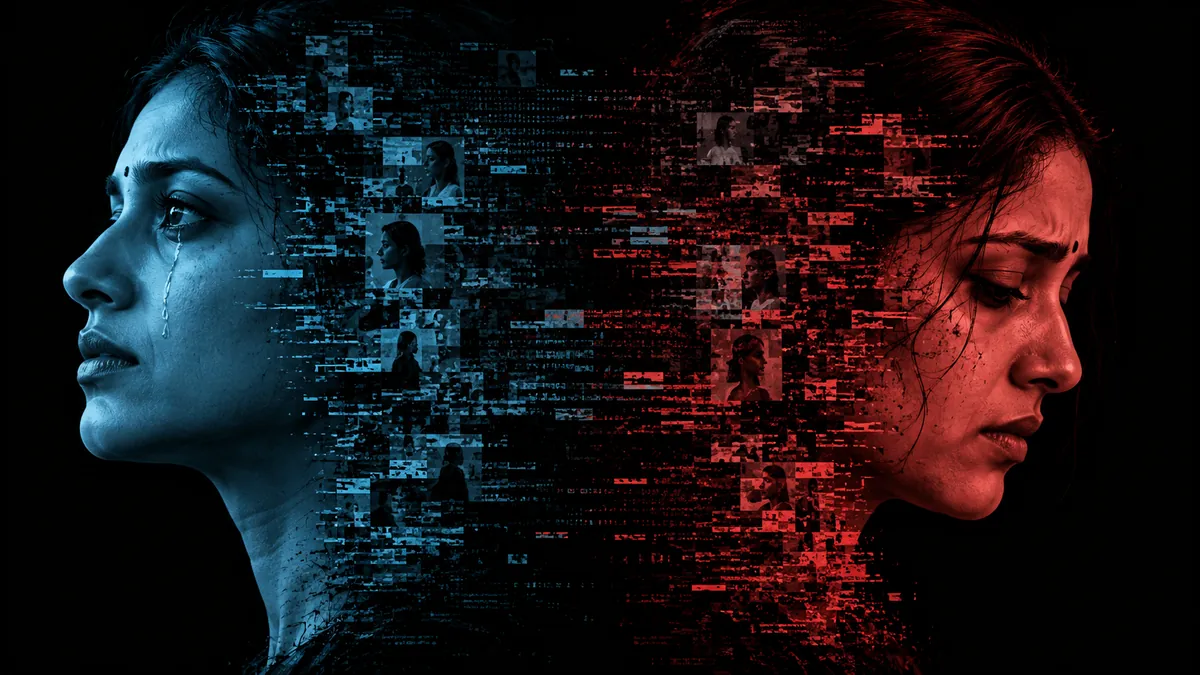
From Vijayawada in 2004 to Raptadu in 2026, India keeps failing the girls it claims to worship
On the morning of October 31, a 21-year-old man walked into a Class 10 classroom at the Zilla Parishad High School in Raptadu, a small town in Andhra Pradesh’s Anantapur district, while a lesson was in progress. He was carrying a power chainsaw, the kind used to fell trees. Police say he went straight for one girl. When her classmate tried to pull him away, he turned the blade on her too.
His name is Hemanth. Her family says he had been harassing her in the name of love. He fled, and police sent more than a dozen teams after him. When they caught up with him in the Atmakur forest, police say he attacked them and they fired six rounds. He is in hospital with serious injuries.

The girl he came for was moved along a green corridor in a special ambulance to Manipal Hospital in Bengaluru. I hope she pulls through. I hope her friend, who had the courage to step in front of a chainsaw, knows how extraordinary that was.
But I have a question for the state. You could clear a green corridor for her after the attack. Why couldn’t you put one guard at the school gate before it?
A man does not stroll into a classroom with a chainsaw in broad daylight unless he is sure of one thing: that nothing much will happen to him. Where did he get that certainty? From our laws? Our courts? Or from watching how this country actually works?
A verse we love to quote
Yatra naryastu pujyante ramante tatra devatah
Yatraitastu na pujyante sarvastatraphalah kriyah
Where women are honoured, the gods rejoice. Where they are not, every good deed bears no fruit.
— Manusmriti 3.56
We recite this line at weddings, in speeches, on Women’s Day posters. We worship the goddess for nine nights every Navratri and wash the feet of little girls as her living form. Then a little girl lies bleeding on a classroom floor, and we feel bad for two days and move on.
Twenty-two years, same blood
If Raptadu feels like a one-off, it isn’t.
On June 21, 2004, final-year MCA students at Sarada College in Vijayawada were waiting in a classroom for their viva. A classmate named Manohar, unable to accept that Srilakshmi had turned him down, stabbed her to death in front of them. The college bears the name of Saraswati, the goddess of learning. According to the High Court’s judgment in the case, a watchman nearby had seen him tuck the knife into his waistband that morning. Someone saw the weapon. No one stopped him.
By 2009, The New Indian Express was running a list of young women in the state who had been killed or maimed, most of them by men who would not take no for an answer: Srilakshmi, Lakshmi Sujatha, Ayesha Meera, Bhargavi, Swapnika, Sameera. I am afraid to count how many names have been added since.
Then it was a knife. Now it is a chainsaw. Governments have come and gone. The state itself has been split in two. In twenty-two years, the one thing that never changed is the fear a girl carries to school.
And it isn’t just Andhra Pradesh. Three days before Raptadu, at a government school in Panchkula, Haryana, an eight-year-old boy allegedly slammed a six-year-old girl’s head against a desk and hit her with a brick. The principal, the class teacher and the watchman have been booked for negligence. The CCTV caught it all. Nobody was in the room to stop it.
Schools without gates, girls without toilets
We hear a lot about “safety standards.” Walk into a government school in rural India and look for them. Many have no gate. Most have never had a security guard. The ASER 2024 rural survey found that only 72 per cent of the government schools it visited had a usable toilet for girls. Roughly one in four did not. We send a teenage girl outside to relieve herself, and then we tell her to be careful.
Poor families send their children to these schools for a hot meal and a chance at an education. Far too often the teachers don’t show up on time. There are good, committed teachers, and I have known several. But they are fighting the system alone. Forget the meal and the lessons. These children cannot even count on coming home alive.
The two-day cycle
Every tragedy in India follows the same script. Two days of outrage. Arrests, press statements, ministers visiting the hospital. On the third day, everyone goes back to normal. A building burns down, and suddenly everyone remembers fire safety. The builder is arrested. The officials who took a bribe to sign off on the building never are.
In Raptadu, the headmistress has been suspended. That is easy. The harder questions are these: Whose job was it to hire a guard? Who was supposed to pay for one? What did the education officers write in their inspection reports? Suspending one woman lets everyone above her off the hook.
How other countries do it
Keeping a school safe is not complicated. Someone has to know who is coming in, why, and where they are going, and someone has to act the moment a child is in danger.
In Abu Dhabi, visitors must show ID at the gate and wear a visitor pass, and no one walks into a classroom uninvited. Across the UAE, every school must have a designated child-protection officer, background checks on staff and a confidential way to report abuse. In Singapore, even parents have to show ID at the gate and collect a pass. In England, every school employee, even those who never teach, must read the child-safeguarding guidance.
India does not lack laws. The Right to Education Act already requires separate toilets for girls, drinking water and a boundary wall at every school.
“The rules exist on paper. They just never make it to the gate.
Who gets to be free?
Should our girls stop studying? Stop working? Stop going out? A boy in her class, a man on the street, a relative, a husband. For far too many Indian women, there is always someone. And for the girls who cannot live with that fear any more, this country has no answer.
So who exactly is free in this free country? The criminal, the swindler, the land-grabber, the killer. They seem to be doing fine.
Srilakshmi. Swapnika. Nirbhaya. Disha. The young doctor killed on duty in Kolkata. A girl in Karimnagar. Now a Class 10 student in Raptadu. When does the list end?
Money, power and a different set of rules
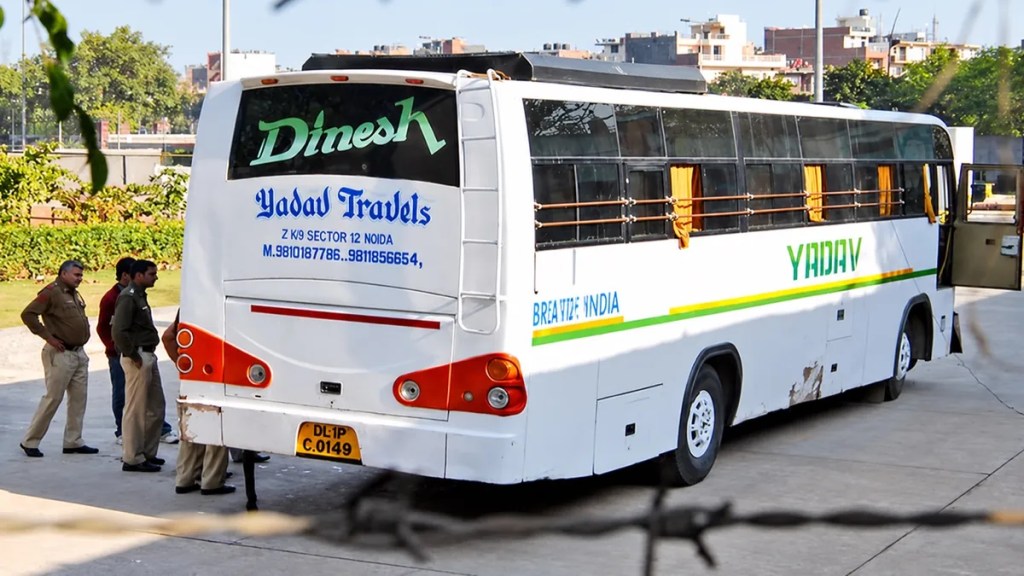
In August, Bharati Mukhi, a 26-year-old from Odisha who had come to Hyderabad to work at a mall and support her family, was crossing the road when a ₹5-crore Aston Martin ran her over. The man allegedly behind the wheel is the son of Andhra Pradesh Rajya Sabha MP Lingamaneni Ramesh. It took days for his name to come out. The charge was death by negligence. He got a notice and station bail.
A teenage girl has filed a POCSO case against the son of Union Minister of State for Home Bandi Sanjay Kumar. Police were accused of dragging their feet on the arrest, and the girl’s mother had to plead for protection, saying the family was being threatened. Whether he is guilty is for a court to decide. But if the accused had been a labourer’s son, would the police have taken their time? Would the complainant’s mother have had to be afraid?
“It doesn’t matter which party is in power. The flags change. The rules for the powerful don’t.
No fear, no consequences
Why do men like these feel so safe? Because nothing frightens them. The thought of committing a crime should send a chill down a man’s spine. In India, it doesn’t.
Why would it? According to the NCRB’s Crime in India 2024 report, in rape cases where trials were completed, only 24.4 per cent ended in a conviction. Of the more than two lakh rape cases before the courts in 2024, nearly 90 per cent were still pending at the end of the year. Convictions that year: 5,032. Meanwhile witnesses are intimidated, families give up, and the accused walks around as if nothing happened.

Democracy is not the problem. A democracy that can be bought is. Prisoners with money enjoy television and phones in their cells. A man who has grabbed land worth hundreds of crores can sit in the legislature in spotless white.
And to the activists who rush to defend the rights of the accused, one question: what about the girl’s right to sit in her classroom and stay alive? What rights did Nirbhaya and Disha get? What about the policemen killed by landmines? Human rights belong to everyone. Why do the loudest voices only ever speak up for some?
Not the gun. The gavel.
The UAE and Qatar prescribe the death penalty for the worst sexual crimes. But even there, the sentence comes only after a court convicts.
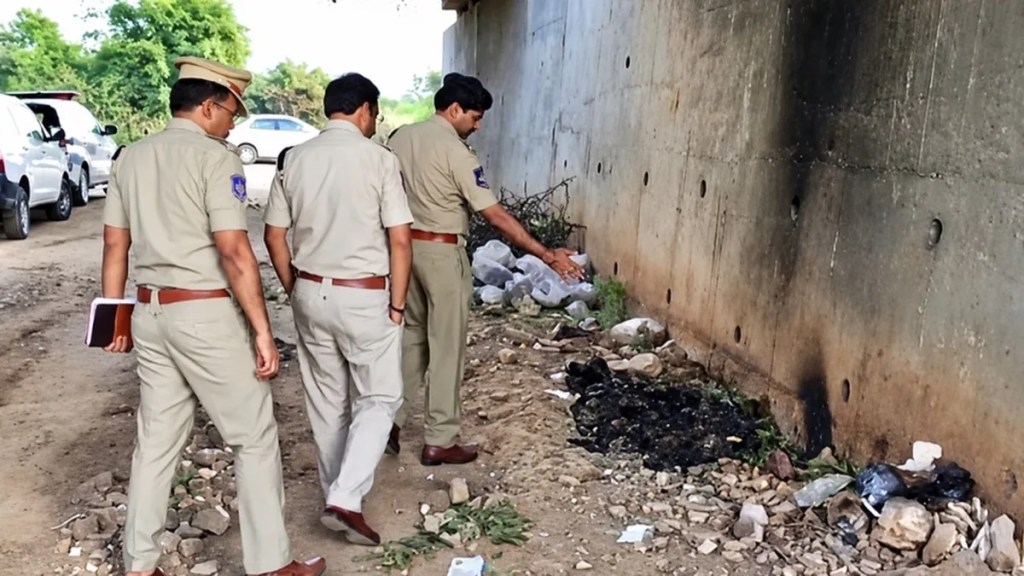
I don’t want justice from a police gun, and Warangal is why. In December 2008, two engineering students from KITS, Swapnika and Pranitha, were attacked with acid. Three weeks earlier, Swapnika’s family had complained to the police that the man was stalking her. The complaint was allegedly ignored. Within three days of the attack, all three accused were dead in a police “encounter.” The town cheered. Swapnika died after twenty days of agony. Eleven years later, the accused in the Disha case met the same end. The crowds cheered again. And now there is a chainsaw in Raptadu. Two encounters did not frighten a single predator. Pranitha, who survived, has said the gun did not give her justice.
Now the same story is being told in Raptadu. He resisted arrest in the forest, so the police had to open fire. We heard it in Warangal. We heard it near Shadnagar. Now we hear it in Atmakur. This time the accused is alive, and that is how it should be. He must stand trial, be convicted on evidence, and receive the harshest punishment the law allows. The Supreme Court’s own guidelines call for an independent inquiry whenever a police shooting leaves someone dead or grievously injured, and that inquiry must happen too. Because the gun we cheer today may be pointed somewhere else tomorrow.
It was not the absence of a gun that killed Swapnika. It was a complaint that sat ignored for three weeks. Give the police a licence to kill, and that gun will never be pointed at the rich. It will always find the poor.
“Would the men accused in the Disha case have died in an “encounter” if they had been well connected?
The inquiry commission appointed by the Supreme Court concluded that the encounter was staged.
What I want is a verdict that hits as hard as a noose. Trials that finish in months, not years. The same investigation, the same speed and the same sentence for an MP’s son, a minister’s son and a labourer’s son. Punishment so certain that the next man reaching for a knife feels his hand shake.
What must change now
- A boundary wall, a gate and a guard at every government school. Not in next year’s budget. This month.
- ID checks and an entry register for every visitor. No outsider reaches a classroom without permission.
- Girls’ toilets with water, doors and locks, and money and staff to keep them working, not just to build them.
- A child-protection officer in every school, and a confidential way for students to report harassment.
- Action against police officers who ignore harassment complaints. The day a complaint is binned is the day a crime begins.
- Fast-track courts that decide cases of violence against women and children within a fixed deadline.
- Accountability for the officials who failed to fund or inspect, not just for the staff on the ground. Whoever signed off shares the blame.
- Regular, mandatory safety audits of every government and private school and college.
- Full state responsibility for the victim’s treatment, education and future.
If school inspectors keep looking the other way, the next victim could be anyone’s daughter. Including yours. She goes to school too.
I’m sorry
Gandhi is often quoted as saying that India will be truly free only on the day a woman can walk alone on the streets at midnight. Forget midnight. In broad daylight, a girl sitting in her own classroom was not safe.
Part of me wants to tell the girls of this country not to be born here. Be born as a flower somewhere and bloom as you please. Be born as a bird and fly free. Be born where a girl is treated not as a goddess but simply as a human being. Let the rest of us live in a country without daughters, in houses with no mother and no sister, hollow as empty doorframes.
That is what my anger wants to say. I won’t say it. This country is yours too. You are not the ones who should leave. The monsters are. You are not the ones who need to change. We are.
Srilakshmi, Swapnika, we failed you. And to the little girl fighting for her life in a Bengaluru hospital: I am part of the society that could not protect you either. I am ashamed. I am sorry. But I will not swallow that shame in silence. I will keep asking, and I will keep writing, until no girl like you ever has to go through this again.