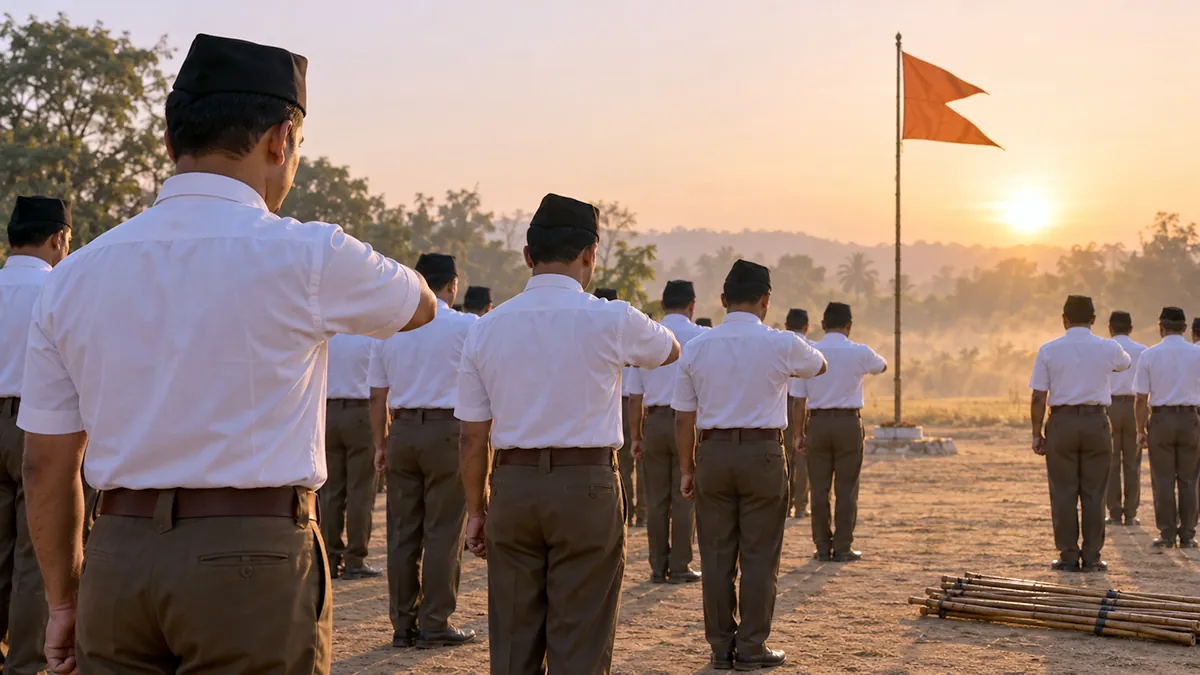
Prayer at a morning shakha · Illustrative image created with AI
Dawn. On an open village ground, swayamsevaks stand in rows before a saffron flag, right arms bent across their chests, heads slightly bowed. Then the Sanskrit prayer begins: ‘Namaste Sada Vatsale’. It bows to an ever-loving motherland, offers the body in its service, and asks for strength, character and courage for the Sangh’s work. The Sanskrit scholar Narhar Narayan Bhide wrote it at Hedgewar’s request, and it was first sung in Pune on 23 April 1940. For eighty-six years since, it has been heard every day at thousands of shakhas.
The organisation behind this prayer has never contested an election. It holds no formal place in government. Yet few organisations have shaped Indian politics and public debate as deeply as the Rashtriya Swayamsevak Sangh. To its members and sympathisers, the RSS is a movement that builds patriotism, discipline and a spirit of service. To its critics, it is an organisation that wants Hindu identity to define what it means to be Indian. Its hundred-year journey has played out between these two views, and the loyalty it inspires is matched by the opposition it provokes.
Founded in Nagpur in 1925, the Sangh completed a century in 2025. A year of celebrations in India and abroad is set to close with a public meeting addressed by its chief, Mohan Bhagwat, in Delhi on 29 November 2026, according to reports. But the centenary is about more than ceremony. How did an organisation that never fights elections gain so much influence? What does it mean by a Hindu nation? And why is it now reaching out so widely to a new generation and to audiences overseas?
It Began on a Playground
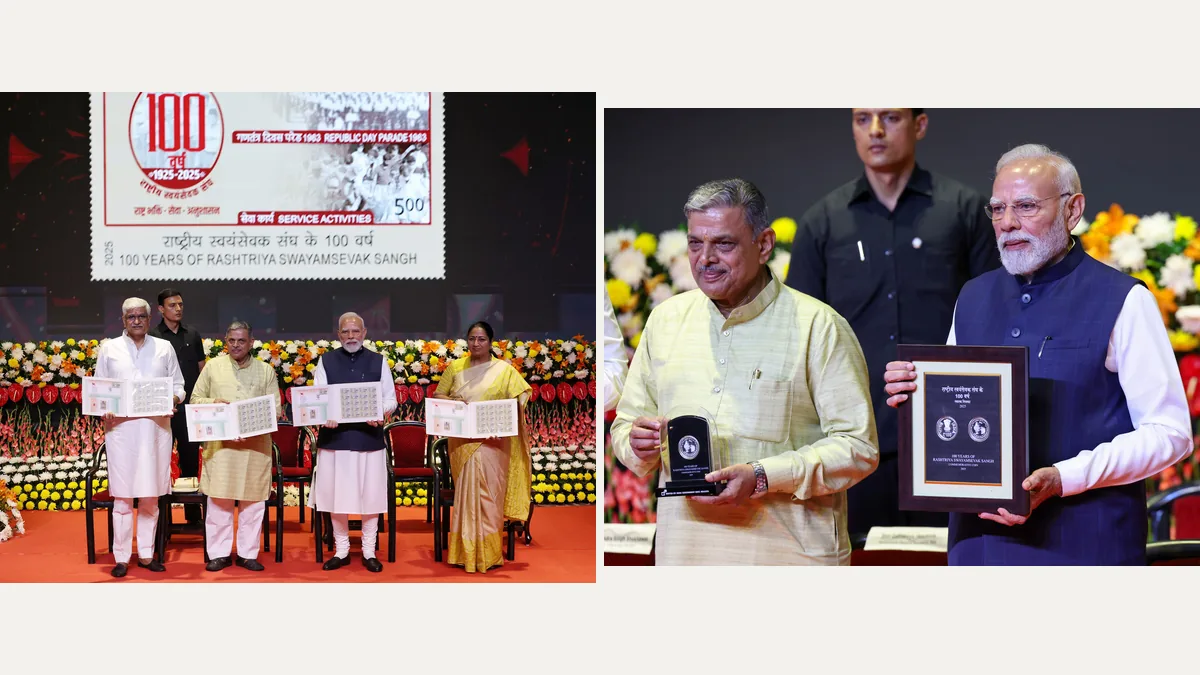
Keshav Baliram Hedgewar founded the Sangh on Vijayadashami in 1925, against the backdrop of the anti-colonial national movement, communal mobilisation and deep caste divisions. His diagnosis was that Hindus, though a majority, were not an organised force. His remedy was patient, local training that would help people rise above their differences and build a shared Hindu identity. After his death in 1940, M.S. Golwalkar, known as Guruji, led the organisation for 33 years. More than anyone else, he shaped its ideology and its growth.
The political scientist Christophe Jaffrelot has traced how the ideology Savarkar gave Hindu nationalism came together with the organisational method Hedgewar built. Still, the Hindu Mahasabha and the RSS are separate organisations. And Hinduism, a vast family of beliefs and traditions, is not the same thing as Hindutva, an ideology that ties Indian national identity to Hindu civilisation. Not every Hindu supports the Sangh.
The basic unit of the RSS is the shakha: a group that meets on an open ground at a fixed hour for exercise, games, prayer and discussion. Those who take part are swayamsevaks, or volunteers. Those who give their whole lives to the work are pracharaks.
The strength of this model lies less in big rallies than in daily contact. Along with friendship, discipline and a sense of belonging, it passes on a particular view of the nation and its history. Supporters call it character building. Critics say ideological training comes with the package. In March 2026 the Sangh said its shakhas had crossed 88,000. There are no membership forms or cards in the RSS; it is an open organisation with no formal membership. So the shakha count is the organisation’s own figure, not a tally of members or a measure of public support.
The Freedom Struggle and Gandhi’s Assassination
Hedgewar came from a Congress background and went to jail for taking part in anti-British agitations. But his personal record cannot be read as the Sangh’s institutional record. According to VSK Telangana, which is affiliated with the Sangh, he joined the 1930 civil disobedience movement in a personal capacity and kept the organisation out of it. A British Home Department report of the time also noted that the RSS stayed away from the 1942 Quit India movement. The leadership’s priority was organising Hindu society. So both claims you often hear, that no Sangh member ever fought for freedom and that the Sangh was a major force in the struggle, miss the full picture.
Nathuram Godse, who assassinated Gandhi on 30 January 1948, had earlier ties with the RSS. Whether those ties continued at the time of the killing is still disputed. His association with the Sangh is one thing; there is no proof that the organisation ordered the murder.
The central government banned the Sangh on 4 February 1948. Home Minister Sardar Patel objected strongly to its activities and to the climate of communal hatred, while rejecting the claim that the organisation was directly involved in the plot. Patel’s letters need to be read with both points in mind.
The ban was lifted in July 1949, after the Sangh adopted a written constitution. It was banned twice more, during the Emergency and after the demolition of the Babri Masjid, each time in very different circumstances.
The Emergency of 1975–77 is the chapter Sangh supporters cite most proudly. Thousands of swayamsevaks and ABVP activists were arrested in satyagrahas against it. Supporters also recall that they ran an underground resistance and lent organisational muscle to the democratic movement led by Jayaprakash Narayan. In the same period, the then chief Balasaheb Deoras wrote to Indira Gandhi asking her to lift the ban. Critics read those letters as an attempt at compromise; voices close to the Sangh describe them as an effort to clear up misunderstandings about the organisation.
The BJP Connection: How Influence Works
Sangh workers gave organisational backing to the Bharatiya Jana Sangh, founded by Syama Prasad Mookerjee in 1951. In 1977 the Jana Sangh merged into the Janata Party, and the “dual membership” row, over whether its members could keep their RSS ties, became a key cause of the splits that followed. Leaders from the Jana Sangh stream founded the BJP in April 1980, with Atal Bihari Vajpayee as its first president. Over time the party moved from its early “Gandhian socialism” towards a stronger emphasis on Hindutva.
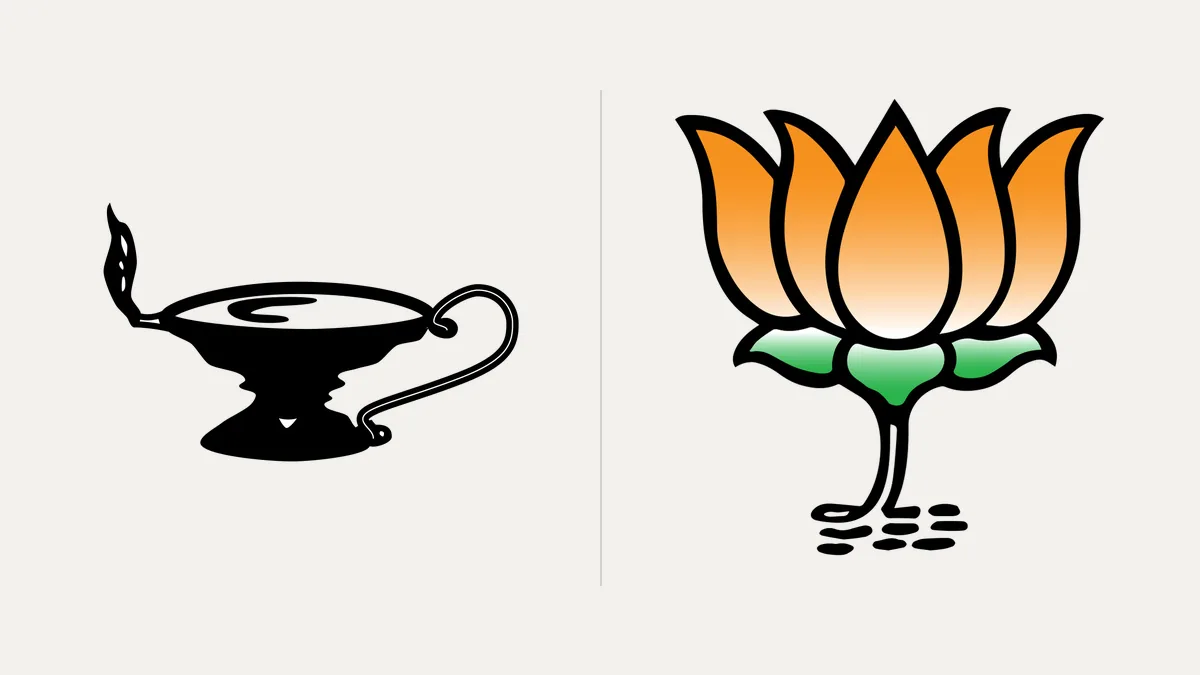
The BJP and the RSS have separate leaderships and separate jobs. But a shared ideology, a common pool of workers and constant coordination make them look like branches of the same tree. Narendra Modi, a former pracharak, becoming prime minister is the most visible example. On 9 July 2024 the Department of Personnel and Training lifted the restrictions on central government employees taking part in RSS activities, removing references to the Sangh from the old orders. The Sangh welcomed the move. The Congress accused the government of politicising offices and staff along ideological lines.
Even so, claiming that every government decision is an RSS directive needs direct evidence. The BJP has elections, alliances and governance to manage; the Sangh has long-term social goals. In 2024, then BJP president J.P. Nadda said the party had grown capable enough to run its own affairs, while explaining in the same interview that the two play different roles and that the ideological bond remains. The relationship shows both closeness and an effort to appear independent.
The VHP and Ayodhya: When Ideology Became a Movement
Golwalkar, S.S. Apte and Swami Chinmayananda were among those who helped set up the Vishva Hindu Parishad in 1964. Its main aim was to bring religious leaders of different Hindu traditions, and Hindus in India and abroad, onto one platform. Where the Sangh concentrates on training workers, the VHP mobilises people through religious gatherings, temples and religious events.
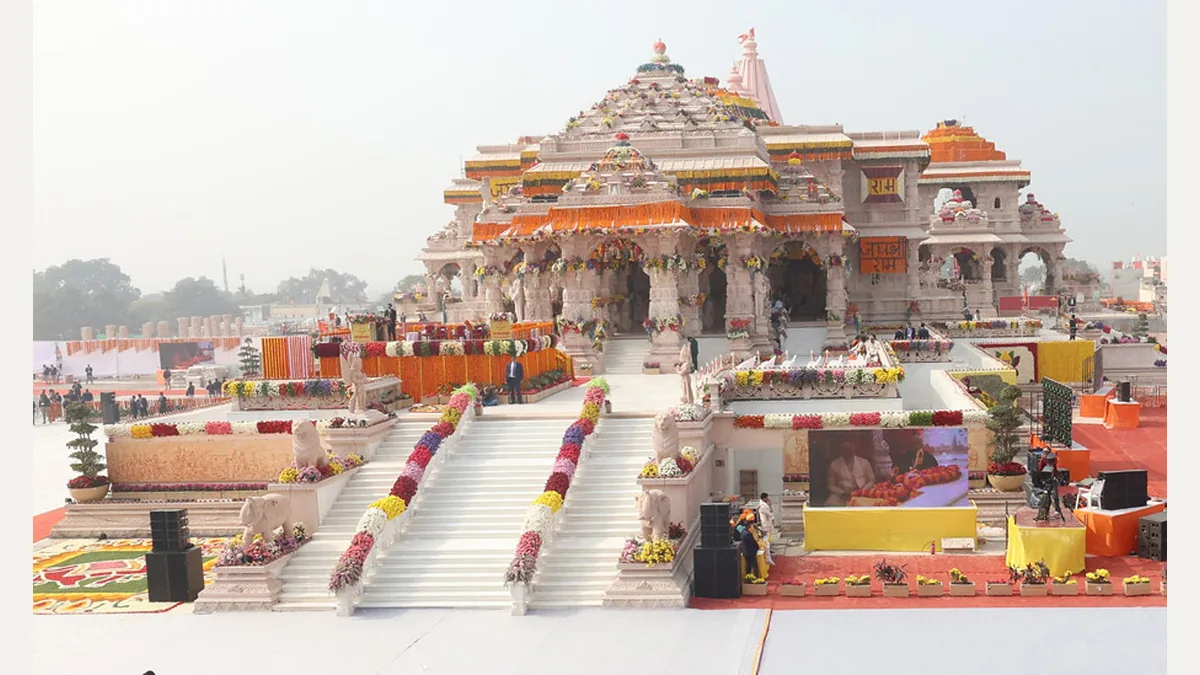
In Ayodhya, the VHP’s religious mobilisation, the Sangh’s network of workers and the BJP’s political campaign worked hand in hand. Supporters saw the movement as righting a historical wrong. Critics saw it as the process by which religious faith was turned into political power.
The demolition of the Babri Masjid on 6 December 1992 was the turning point. In 2019 the Supreme Court handed over the disputed site for a temple, but it also made clear that the demolition was a serious violation of the rule of law. The verdict on the land did not legitimise the demolition.
Growth Through Service, and the Transparency Question
The Sangh Parivar has spread through affiliates in almost every field: the ABVP among students, the Bharatiya Mazdoor Sangh among workers, Vidya Bharati in education and Seva Bharati in social service. Each has its own management, but they are bound together by ideology and by the people who staff them.
Their work in education, health and disaster relief deserves recognition. For Telugu readers, the closest example is the Diviseema cyclone of November 1977, after which, by the Sangh’s own historical account, swayamsevaks joined the relief effort. At the same time, service also builds public goodwill and credibility for the organisation, and that deserves a closer look too. Helping people and expanding an organisation can happen at once. In its 2025–26 report, the Sangh said it had recorded more than 152,000 service activities. That too is a self-reported figure.
There is also a long-running debate over registration and financial transparency. Bhagwat has explained that the RSS is not a registered body but works as a legally recognised association of individuals, and he has spoken about its guru dakshina donations. Critics argue that an organisation with this much public influence owes more clarity about its income, spending and accountability. Not being registered does not by itself make the Sangh illegal. The transparency question, though, stands on its own.
What Is a “Hindu Rashtra”?
The word rashtra, as the Sangh uses it, does not mean a state in the sense of a government. The Sangh takes it to mean a nation, a people, and speaks of a Hindu Rashtra in that sense.
In the Sangh’s telling, it is a shared civilisational identity rooted in tradition, culture and the motherland. Not everyone has to worship the same god; people of different faiths, it says, can be part of this identity. Bhagwat has said that India is already a Hindu Rashtra and needs no formal declaration, and that Islam will remain in India and mutual trust is essential.

Critics trace their doubts to Golwalkar’s writings. They point to passages in his 1966 collection Bunch of Thoughts that describe Muslims, Christians and communists as “internal threats”. In September 2018, Bhagwat explained that some of those remarks belonged to their time and should not be treated as the Sangh’s permanent views. Opinion is divided on whether this marked a genuine shift or a revision meant to win public acceptance.
Accepting that other religions exist is not the same as accepting equal citizenship. The critics’ question is not simply whether people of other faiths may live in India, but whether they can live here as equal citizens while keeping their own identity. Will a citizen who does not accept a “Hindu” identity, even in its cultural sense, be seen as equally Indian? If the majority’s culture becomes the national yardstick, where does that leave other traditions? At the same time, anyone who pins specific laws or government actions on the Sangh needs to show the link with evidence.
Supporters argue that Hindu civilisational identity embraces many faiths and is no barrier to equal rights. Critics want that assurance to show up not just in speeches, but in how laws are enforced, in people’s safety and in everyday public life.
The argument over secularism follows from this. In June 2025, general secretary Dattatreya Hosabale called for a review of the words “secular” and “socialist” in the Preamble, pointing out that they were added during the Emergency. Opposition parties criticised the remark. The Supreme Court had already, in November 2024, dismissed petitions challenging those additions. When the words were added is one question; whether the Constitution’s guarantees of equality and religious freedom hold is quite another.
Caste, Women and the Idea of Unity
For an organisation seeking Hindu unity, caste is the biggest challenge. The Sangh has put the stress on ending untouchability and on social harmony between castes, which it calls samajik samarasta. But how far does sharing a programme change caste dominance? How much more equal have leadership, opportunity and resources become? Those are the tests any talk of harmony has to pass.
The Sangh’s main shakha network is for men. For women, Lakshmibai Kelkar founded the Rashtra Sevika Samiti in 1936, which describes itself as inspired by the Sangh but independent of it. Supporters point to the training and leadership roles it offers. Critics ask whether women have an equal share in the decisions that matter most.
Why Talk to Gen Z?
Working with young people is nothing new for the Sangh. The challenge now is staying connected with a generation that has grown up online, both to pass on its cultural values and to find new workers and future leaders.
On 6 August 2026, at the 15th anniversary of IIMUN in Mumbai, Bhagwat spoke with some 2,000 young people from Gen Z and Gen Alpha. He told them that protest is a form of conversation in a democracy, and that they should verify what they read on social media. Held in the Sangh’s centenary year, the event was one of the clearest signs of its push to reach a new generation.
Joint general secretary Mukunda C.R. has said young people cannot be reached through speeches and posters alone; it takes steady conversation and a real effort to understand how they think. He also said around 21,000 young swayamsevaks attended training that year. These figures come from the organisation itself.
The “Panch Parivartan”, a five-point programme covering social harmony, family values, the environment, swadeshi and self-reliance, and civic duty, is also helping the Sangh connect with wider society.
But Gen Z is not a single bloc. Its questions about jobs, caste discrimination, gender equality and personal freedom, and the answers it gets, will decide how close that bond can grow. Drawing young people in is one thing; earning their trust is another.
“Drawing young people in is one thing; earning their trust is another.
Making New Friends Abroad
Outside India, the Sangh’s ideas are carried by the Hindu Swayamsevak Sangh (HSS), which is registered separately under local laws. In the centenary year, the Sangh’s top leaders travelled abroad themselves. In April 2026, Hosabale toured Britain, the United States and Germany, meeting academics, policy circles, elected representatives and members of the Indian diaspora, according to the Sangh. Bhagwat later attended events in New York, Toronto and London. The stated aims were to explain the Sangh’s view of India, of Hindu society and of itself, and to talk about the idea of universal oneness.
The tours also seem to serve other purposes: building ties with young people of Indian origin, answering international criticism and putting the Sangh’s case to policymakers. That reading rests only on the pattern of the visits.
Before the New York event, civil rights groups protested. The US Commission on International Religious Freedom (USCIRF) had recommended that the US government deny RSS leaders high-level meetings and diplomatic courtesies, and India’s Ministry of External Affairs rejected the commission’s report. A recommendation is not a government decision. To some, the tours are an image makeover. In the Sangh’s account, they are a dialogue with many communities.
A Final Word
In a hundred years, the RSS has weathered three bans, endless criticism and just as many staunch defences. Its rise from an hour-long daily gathering on an open ground to an organisation that shapes national politics shows what steady local work can build. Like it or not, it has been a Dronacharya to the BJP, the teacher who trained it.
But the generations have changed, and so has the world. The gap between those who once walked to the shakha at dawn and those who now see the world through the phone in their hand is wide. This generation asks blunt questions about jobs, equality and personal freedom. How far the Sangh can win it over is still an open question.
Can it stay true to its roots as a Hindutva organisation and still bring itself closer to this generation? How far will the unity it speaks of be felt by every citizen as equal dignity and security? Only time will tell.
Based on sources available as of 21 October 2026. Figures released by the organisation are reported as its own claims.